Just Adopted a Rescue Dog? The 3-3-3 Rule and the First-Three-Weeks Setup That Actually Helps Them Settle
The first 48 hours, he lived under my coffee table. Wouldn’t take a treat from my hand, flinched at the TV, and peed on the rug at 3 a.m. like he’d never been outside in his life.
He had, of course. The shelter paperwork said “house-trained, good with people.” Both things were true — just not on day one. If you just brought a rescue dog home and you’re wondering whether you made a terrible mistake, you didn’t. You’re just in the part nobody warns you about.
The 3-3-3 rule: what the shelter volunteer should have told you
Rescue folks repeat it like a mantra: 3 days, 3 weeks, 3 months.
The first 3 days, your dog is overwhelmed. Shut down is the default setting — not eating much, hiding, startling at normal household sounds. This isn’t their personality. This is a dog running on fumes, trying to figure out if this new place is safe.
The first 3 weeks, they start settling in — and testing you. Appetite comes back, the goofy starts leaking out, and so do the boundaries: counter-surfing, selective hearing, chewing something you liked. This is the phase where most adopters panic. “He was an angel at the shelter and now he’s eating my doorframe!” Relax. A dog only misbehaves in a place it already feels safe enough to be a dog in. That’s progress wearing a disguise.
The first 3 months, they’re home. Real trust, real routine, real personality — the dog you actually adopted finally shows up.
Knowing the timeline doesn’t make week one easy. But it stops you from trying to fix things that aren’t broken.
Week one: less is more
Almost every mistake I see new adopters make is a version of too much, too soon:
- Don’t throw a welcome party. Your friends can meet him in month two. In week one, every new human is a pop quiz he didn’t study for.
- Don’t take him to the dog park “to make friends.” He’s already at maximum input. A chaotic off-leash park on day four is how you get a bite incident and a returned dog.
- Don’t buy a mountain of toys. A shut-down dog will ignore toys for days — sometimes a full week. One soft toy is plenty for now. The 12-pack of squeakers can wait until you know what he actually likes.
- Don’t take hiding personally. Under the table is a strategy, not an insult. Let him come out on his schedule, not yours.
Give them one small world, not the whole house
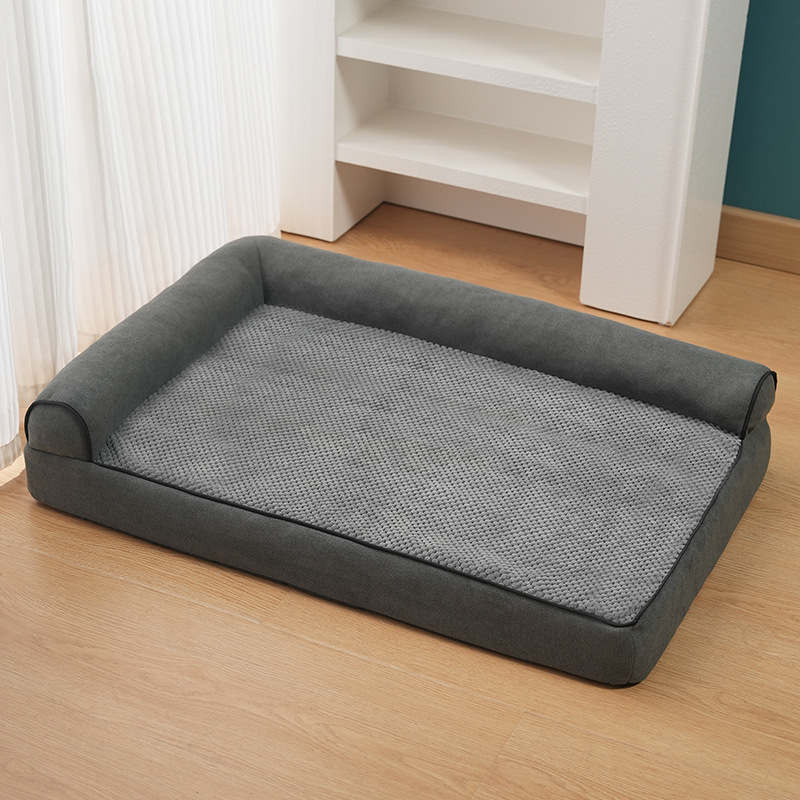
Here’s the thing most setup guides miss: a new dog doesn’t want your whole house. They want one safe corner they fully understand. Dogs settle fastest when they have a den — a defined spot, ideally with something solid on at least one side, where nothing surprising ever happens.
Pick a quiet corner, put down a bed, and make it law: that bed is the dog’s embassy. Nobody bothers them there. Kids, guests, the cat — the bed is sovereign territory.
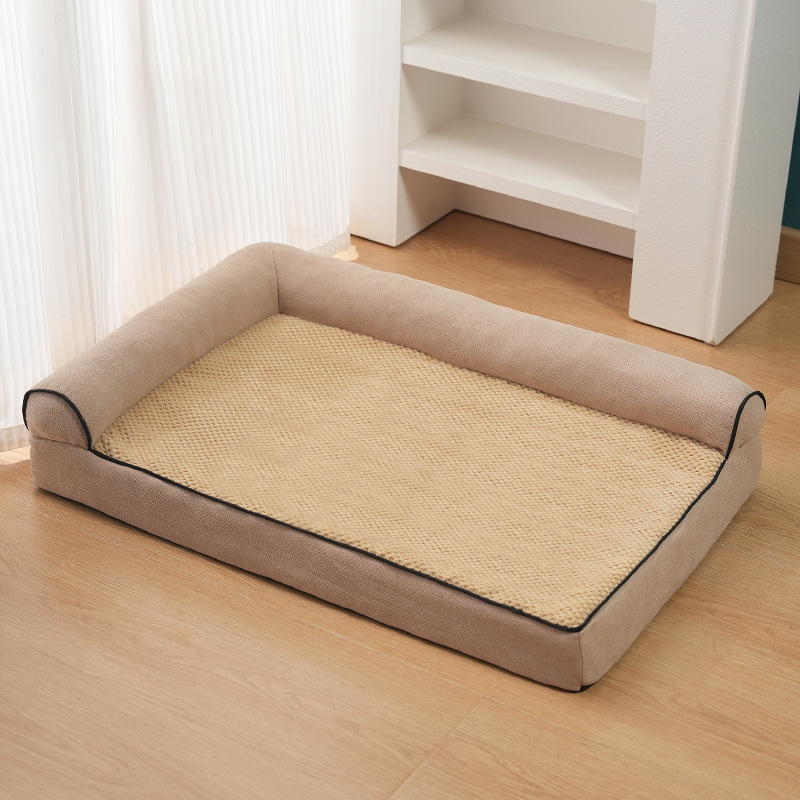
What works as the embassy: a bed with actual structure. I’ve become a believer in bolster-style beds for new rescues, because the raised edge does the job of a den wall — the dog can press its back against something, lean, sprawl, or curl up nose-to-tail. The Bolster Sofa Dog Bed is built exactly like that: L-shaped cushion, memory-foam base, shaped so a nervous dog can wedge itself into the corner and finally exhale.
Two practical notes from someone who learned the hard way. First: buy the washable one. Week-one accidents are normal — my guy’s 3 a.m. rug incident was not his last surprise. A bed with a removable, machine-washable cover isn’t a luxury feature; it’s the whole plan. Second: don’t size up “to be safe.” An XXL bed that swallows a 15 kg dog doesn’t feel like a den, it feels like a parking lot. Snug wins.
Cheap trick that actually works: put a worn t-shirt of yours on the bed. Your smell becomes part of the safe place. Costs nothing, beats every $30 “calming” spray on the shelf — and yes, I’m telling you the spray isn’t worth buying.
Decompression walks beat the dog park (for now)
Forget exercise quotas in week one. What a new rescue needs is decompression: 15–20 minutes on a quiet route, same streets each day, and one rule — the dog’s nose sets the pace. Sniffing is how dogs download a new neighborhood. A twenty-minute sniff walk tires a stressed dog out more honestly than an hour of forced marching.
Gear matters here more than people think. You want a leash you can slip on without wrestling buckles onto a nervous dog, with enough length to let them range and sniff, but real control when a skateboard appears out of nowhere. I’ve been using a slip-style lead for this: the Steady-Pull Training Leash comes in 1.5 m for city streets and 3 m for open spaces — I keep the 3 m for decompression walks, where those extra meters are the difference between “held tight” and “free to be a dog.” The leather stop toggle is the part I care about: when a new rescue panic-pulls (and they will), the loop can’t cinch down into a choke. One motion on, no hardware to fumble with cold hands at 6 a.m.
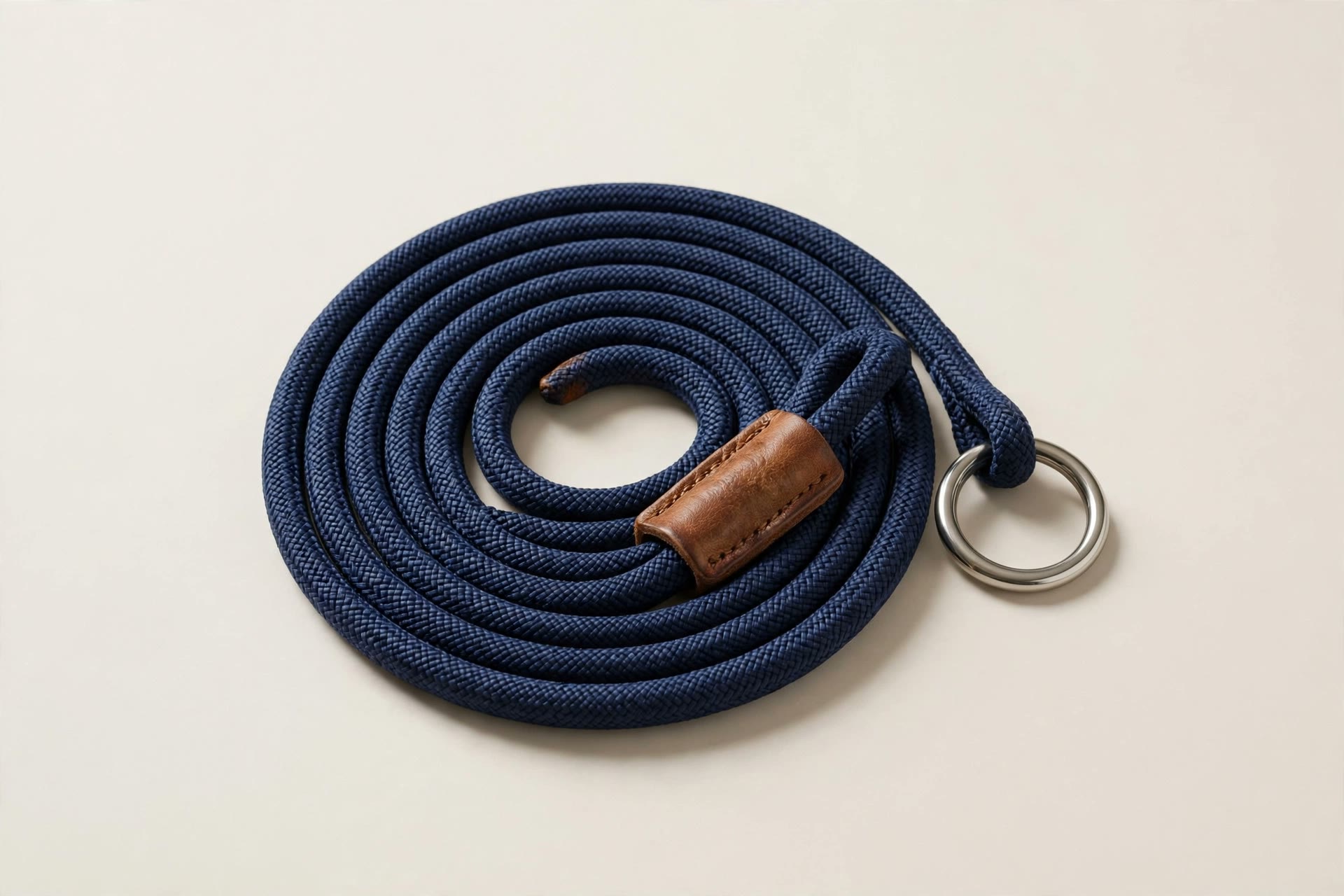
Two safety notes, because slip leads demand respect: keep the ring positioned behind the ears where you actually have steering, and never leave a slip leash on an unsupervised dog — it’s a walking tool, not a collar, not a tie-out. And please: no matter how soulful the eyes get, do not go off-leash in week one. A dog that doesn’t know where home is yet doesn’t come back. That’s not pessimism, that’s physics.
What weeks two and three actually look like
Around day 10, something shifts. Appetite normalizes. The tail starts doing that helicopter thing. You’ll get the first play bow — usually aimed at absolutely nothing — and you’ll feel like crying a little. Totally normal.
This is also when the boundary-testing starts in earnest, which is your cue to begin, gently: five-minute training sessions (the 3 m lead is perfect for recall practice in an empty field), one new room of the house at a time, and the first real vet visit if you haven’t done it yet. Short, boring, consistent. Dogs find boring deeply reassuring.
By month three, you’ll look at the dog asleep upside-down on the couch — your couch, obviously, the embassy treaty expired weeks ago — and barely remember the coffee-table era.
The two things I’d buy before pickup day
If I could hand every new adopter a starter kit, it would be embarrassingly short: a structured, washable bed that works as a den from night one, and a slip lead with a real stop for calm decompression walks. Everything else — the toy mountain, the fancy treats, the second bed for the bedroom — can wait until you know the dog. The 3-3-3 rule handles the rest.