My Cat Got Fat. The Vet Said “Move More” — Here’s the Indoor Exercise Plan That Actually Worked
The vet weighed my cat, looked at the number, looked at my cat, and said: “6.2 kilos. He should be 4.5, maybe 5. At this rate he won’t be jumping onto the sofa in a year.”
My cat, to his credit, sat on the exam table shaped like a dinner roll and pretended this had nothing to do with him.
On the drive home I did the math nobody wants to do. An overweight indoor cat isn’t just “chubby and cute.” It’s joints grinding under extra load. It’s diabetes risk. It’s a shorter life, full stop. And the standard advice — feed less — only got me a cat who screamed at 3 a.m. next to an empty bowl and then stole food off the counter.
Here’s the part nobody tells you: you can’t walk a cat like a dog to burn it off. Well, technically you can harness-train one, but try explaining cardio to an animal whose entire philosophy is “why run when I can nap.” Exercise for an indoor cat has to be tricked into happening. It has to feel like hunting, not working out.
So I built a plan around three things. Six weeks later: 6.2 to 5.7 kilos. The vet actually nodded.
1. The automatic workout: a ball that hunts back
I work full days. Telling myself I’d play with the cat every evening lasted exactly four days. I needed something that worked while I wasn’t there.
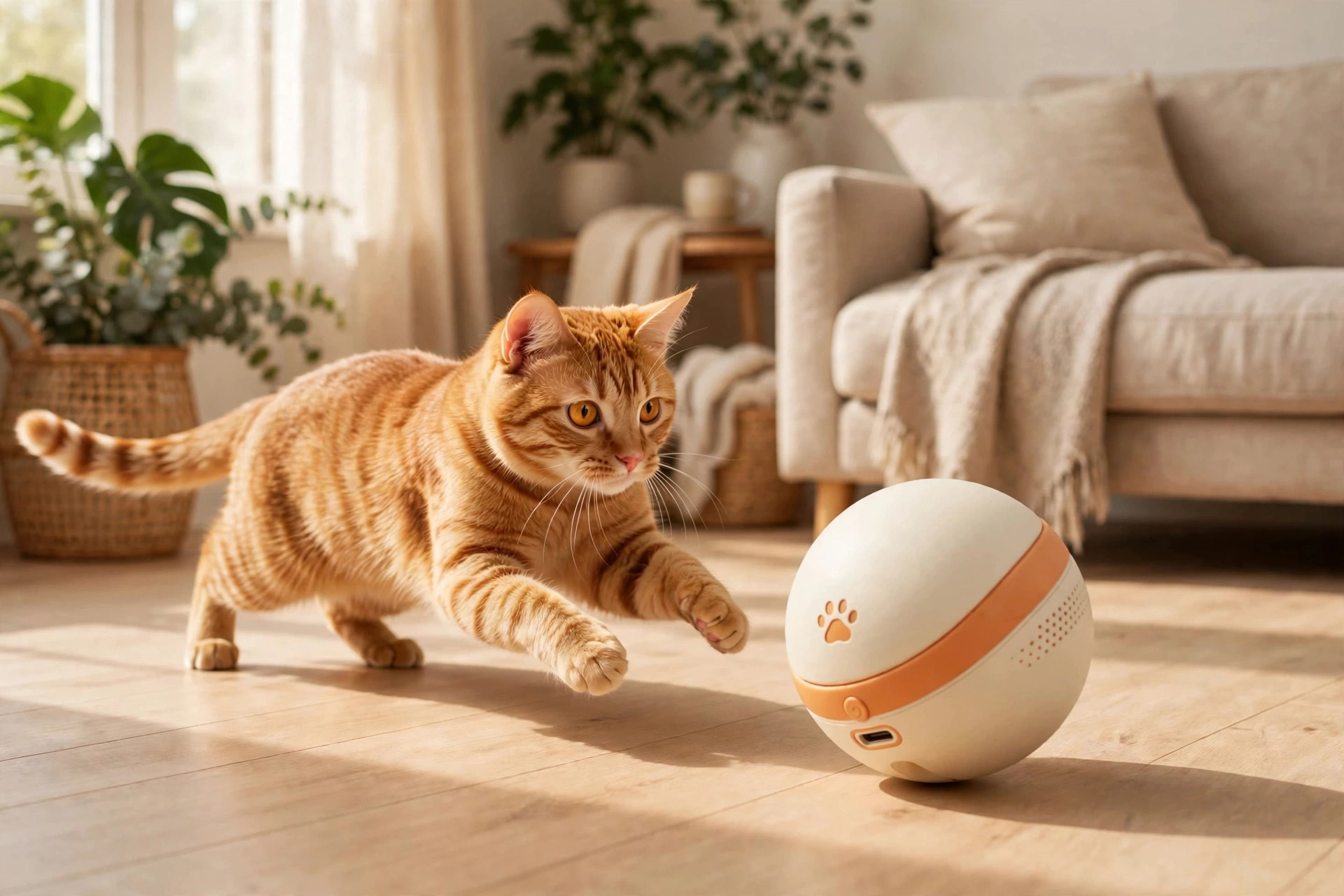
The Zoomie Ball is a self-rolling smart ball — 7 cm across, 85 grams, with three speed settings and a motor under 40 decibels. It darts, pauses, spins, changes direction on its own, mimicking prey. Two hours of play per charge, one hour to recharge, and if the cat ignores it for five minutes it naps and wakes the second it’s touched. Obstacle sensors keep it from getting stuck under the fridge.
Day one, my cat was terrified of it. Hid under the sofa. Day two, he batted it once and jumped back. Day three, I came home to a cat panting next to a ball that had rolled itself under the coffee table — the feline equivalent of collapsing on the gym floor.
My honest take: it’s not a babysitter, and the marketing that implies you can just switch it on and leave is overselling it. Where it actually shines is the 20 minutes before bed. I turn it on while I brush my teeth. He gets his zoomies out. Then he sleeps through the night instead of parkouring off my face at 4 a.m. That alone was worth it.
2. The hunt sequence: ten minutes with a feather wand
The ball handles solo exercise. But a cat’s brain needs the full hunt — stalk, chase, catch, eat. Skip the catch and you get a frustrated cat. That’s exactly why I tell people not to bother with laser pointers: the cat can never catch the dot, and it’s the equivalent of teasing someone with food they can never eat. Cruel, not fun.
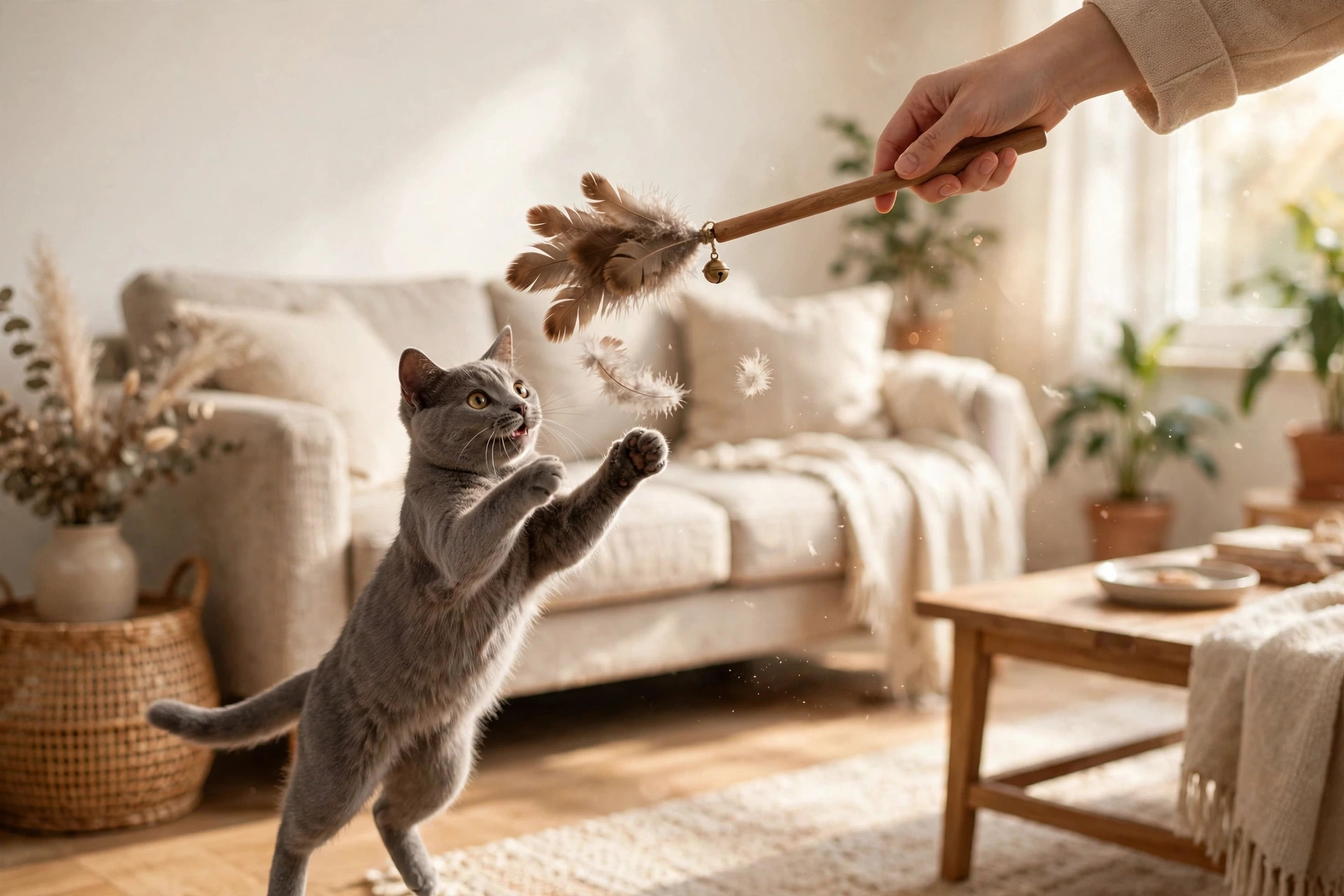
The Flutter Wand does the job properly. Real turkey and guinea fowl feathers, a flexible fiberglass rod that whips like a bird in flight, and a 90 cm cord that keeps your fingers far from claws. The feather head quick-swaps when it gets shredded, which it will.
My routine, ten minutes, once a day:
- Two minutes slow — drag the feathers along the floor like something sneaking.
- Five minutes fast — sudden direction changes, over the sofa arm, behind the chair leg. Let him sprint.
- Three minutes cool-down — slow it down and LET HIM CATCH IT. This is the part most people skip. Then a small treat immediately after. Hunt, catch, eat. That’s the sequence his brain is wired for.
Ten minutes. That’s shorter than scrolling your phone on the toilet. And a cat that just “killed” something doesn’t beg for snacks at midnight — the hunt is over, the belly is satisfied, the brain clocks out.
3. The warm-up station: a scratcher a fat cat will actually use
Here’s something the fitness influencers of the cat world never mention: an overweight cat can’t use half the “exercise” furniture sold for cats. Those tall sisal towers? My 6.2-kilo boy looked at the 1.5-meter tower, looked at me, and the message was clear: absolutely not.
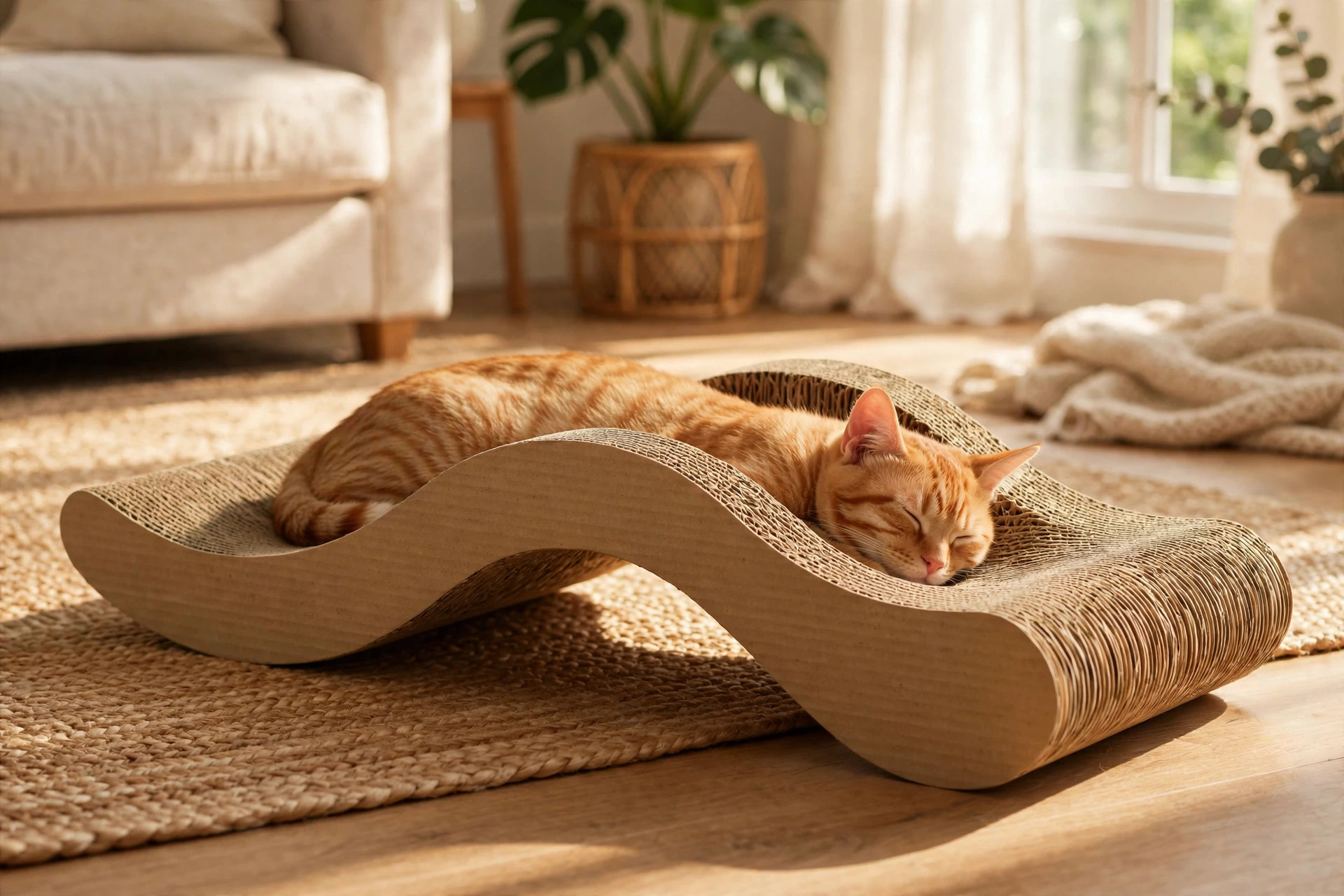
The Scratch & Snooze is a curved cardboard lounge — scratcher and bed in one, sitting low to the ground. High-density honeycomb cardboard, reversible for double the lifespan, and it comes with catnip. I sprinkled a pinch on it. He climbed on, scratched, stretched his whole spine out along the curve, and fell asleep mid-stretch. Exercise, stretching, nap — the holy trinity, without moving an inch.
Don’t underestimate scratching as exercise, by the way. A proper full-body scratch-and-stretch engages the shoulders, back, and hind legs. It’s the cat version of morning yoga, except the cat actually does it.
What actually changed
Six weeks. Ball on every evening, wand play daily, scratcher always available. Food measured, not eyeballed — that part matters, I’m not pretending toys alone did it. 6.2 kilos down to 5.7. The vet weighed him, raised an eyebrow, and said “whatever you’re doing, keep doing it.”
The part I didn’t expect: he’s more fun now. A fit cat is a playful cat. He initiates games. He does the sideways crab-walk down the hallway. The dinner-roll cat is gone, and honestly, so is some of my guilt.
When’s the last time your cat really ran? Not trotted to the food bowl — ran, full sprint, ears back? If you can’t remember, that’s your answer. Start tonight. Ten minutes and a feather wand is all it takes to begin.
The gear that made it work:
- Zoomie Ball – Interactive Cat Toy — the automatic workout while you’re out
- Flutter Wand – Feather Teaser — the ten-minute hunt sequence
- Scratch & Snooze – Cardboard Lounge — the low, fat-cat-friendly scratcher