Why Your Dog Destroys Every Bed (and How to Pick One That Actually Survives)
My beagle mix, Biscuit, destroyed three dog beds in two months. Not chewed a corner — destroyed. Fluff everywhere, like a snow globe exploded in my living room. The third one was a $60 “orthopedic” bed that lasted exactly nine days.
I was furious. Then I watched him do it, and it changed how I shop for dog beds entirely.
He didn’t attack the bed out of spite. He circled it, pawed at it, dug at it like he was excavating treasure — for about four minutes — then curled up and fell asleep in the crater he’d made. The destruction wasn’t the point. The nesting was.
Why dogs actually destroy their beds
Once you know the reasons, the “bad dog” story falls apart. Here’s what’s really going on:
1. The nesting instinct is real. Wild canines dig and circle before lying down — it flattens grass, checks for snakes, regulates temperature. Your couch-potato labrador still has this software installed. A flat, thin mat gives him nothing to dig into, so he digs through it. That’s not misbehavior; it’s a bed that doesn’t match the instinct.
2. Boredom is the #1 bed killer. Biscuit’s worst destruction always happened on days I skipped the evening walk. A tired dog sleeps. An under-exercised dog renovates. If your dog only shreds the bed when you’re at work, the bed isn’t the problem — the schedule is.
3. Anxiety comes out through the mouth. Dogs that chew beds during thunderstorms, or only when left alone, are self-soothing. The repetitive ripping motion is calming, the same way some people bite their nails. Punishing this is like yelling at someone for fidgeting — it adds stress to stress.
4. It’s the wrong size or too hot. A dog that can’t fully sprawl will keep repositioning, bunching the bed up, and eventually tearing it in frustration. And some dogs run hot — a thick plush bed in a warm apartment becomes an oven, so they dig trying to find a cool layer that isn’t there.
5. Puppies are just… puppies. Teething hurts. Everything is a chew toy until about 7 months. No bed survives a determined teething puppy unsupervised, and no honest brand will tell you otherwise.
So what bed actually survives?
Here’s the uncomfortable truth no pet brand puts on the box: no dog bed is truly chew-proof. Any company claiming “indestructible” is selling you a fantasy. What you can do is pick a bed that works with the instinct instead of against it — and most destruction stops there.
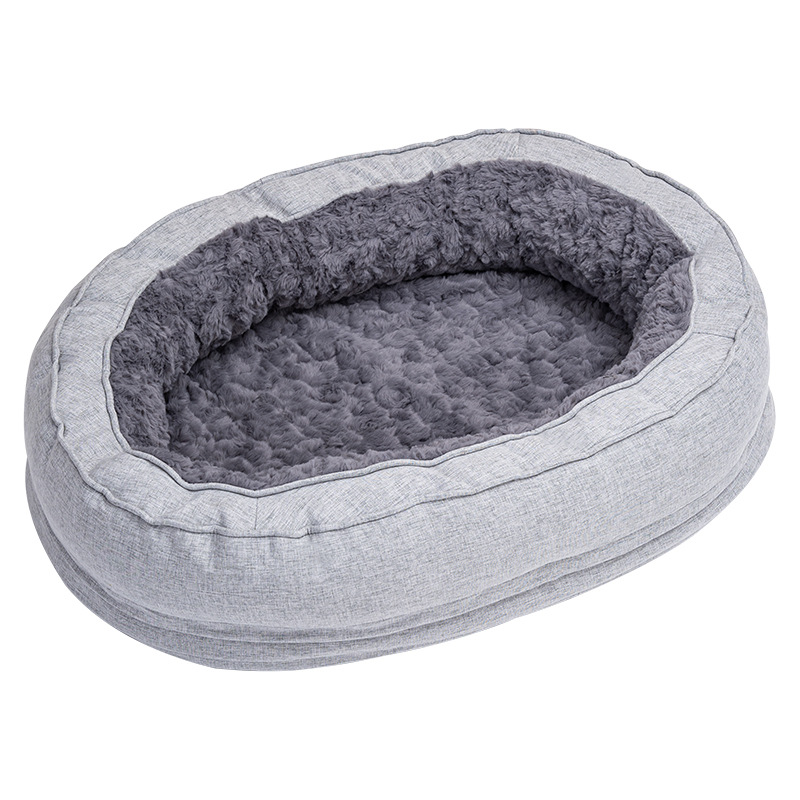
Give the digger something to dig. This was Biscuit’s whole issue. A bed with a raised rim — like the Cloud Donut Calming Bed — lets a dog paw, circle, and burrow into the bolster edge instead of ripping the middle apart. The raised rim cradles their head and paws, which also happens to calm anxious dogs; the nesting motion and the hug are the same comfort loop. Biscuit still circles three times before lying down. He just doesn’t excavate anymore.
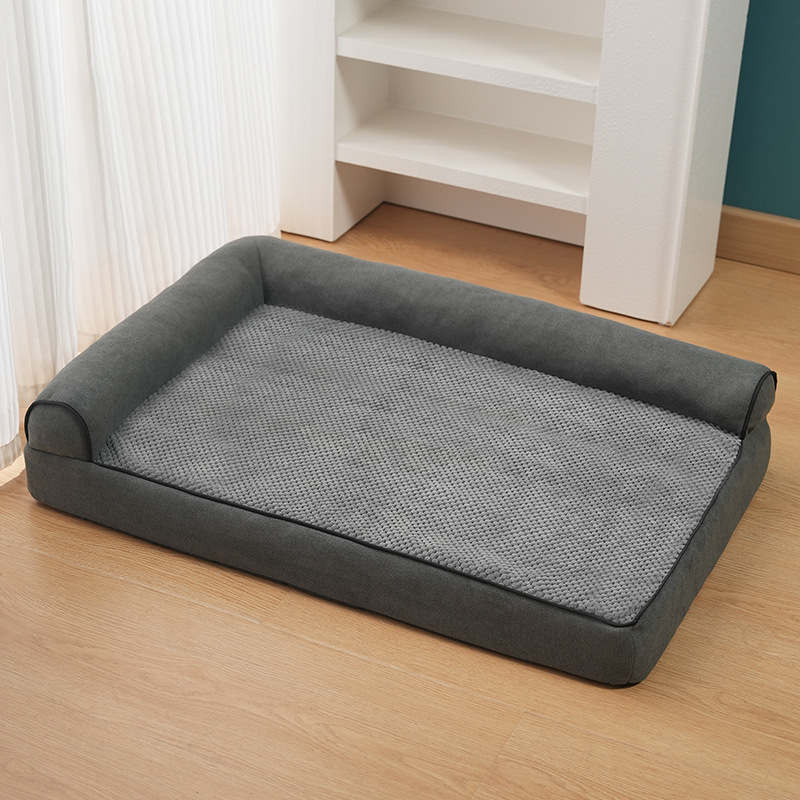
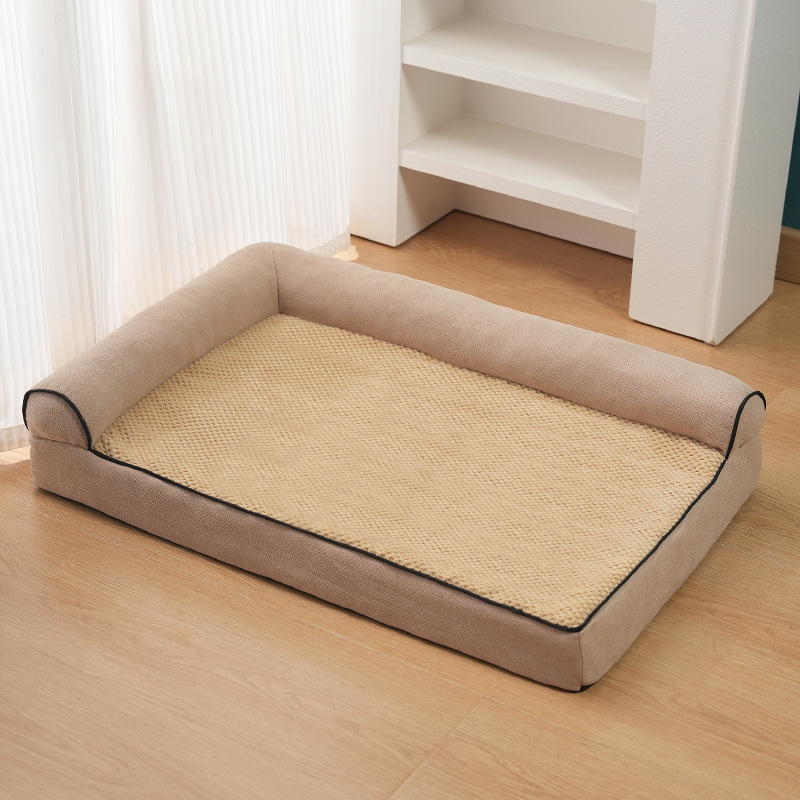
Match firmness to the chewer. Soft plush is lovely for gentle sleepers, but a power chewer will treat it like a stuffed toy. A firmer memory-foam base — like the Bolster Sofa Dog Bed — is simply less fun to rip. There’s no satisfying fluff explosion, so most dogs lose interest. The L-shaped cushion still gives them a headrest to lean on, so they get the comfort without the shreddable filling.
Washable is non-negotiable. Here’s one nobody talks about: a bed that can’t be washed builds up smell, and built-up smell triggers more chewing. Dogs investigate strong odors with their mouths. A fully machine-washable bed (the donut) or a removable washable cover (the bolster) breaks that cycle. If a bed says “spot clean only,” walk away — that bed has a 6-month lifespan in a real house.
Size up, not down. Measure your dog sprawled out, nose to tail, then add 15–20 cm. A bed that’s technically “their size” but forces a tight curl will get bunched, dragged, and eventually torn. Dogs destroy beds they’re uncomfortable in far more than beds they love.
What I stopped buying
The $12 flat mats from the discount bin — dead in a week, and the thin foam inside crumbles into pieces small enough to swallow. That’s a vet bill, not a bargain. Calming sprays marketed for bed-chewing — the evidence is thin and the price isn’t. And anything labeled “chew-proof” with no explanation of how — if they can’t tell you the mechanism, there isn’t one.
What actually fixed it for us, in order of impact: a real evening walk (40 minutes, not 15), a frozen Kong when I leave, and a bed with a rim he can nest into. Bed destruction went from weekly to zero. The current bed is eight months old. It looks it — but it’s intact, and that’s the metric that matters.
So ask yourself: is your dog destroying the bed, or is the bed failing your dog? Nine times out of ten, it’s the bed.
Our picks for serial bed-destroyers
Cloud Donut Calming Bed — for the circlers, diggers, and anxious nesters. Raised bolster rim to burrow into, machine washable, warm neutral tones that don’t scream “dog furniture.”
Bolster Sofa Dog Bed — for the power chewers and big sprawlers. Memory-foam support, L-shaped cushion for leaning, removable washable cover. Less fun to rip, just as good to sleep on.