Pulling Like a Freight Train? What a P-Leash (Slip Lead) Really Is and How to Use One Without Hurting Your Dog
Last spring my neighbor’s Labrador spotted a squirrel across the street and took me with him — thirty kilos of pure optimism, me water-skiing behind in socks on wet pavement. That was the morning I stopped pretending my flat collar was “working fine.”
If your walks feel like arm day at the gym, someone has probably told you to “just get a slip lead.” Then you googled it, saw the words “choke chain” in the same paragraph, and closed the tab. I did exactly that for two years. Here’s everything I wish someone had explained before I finally tried one.
What a P-leash actually is
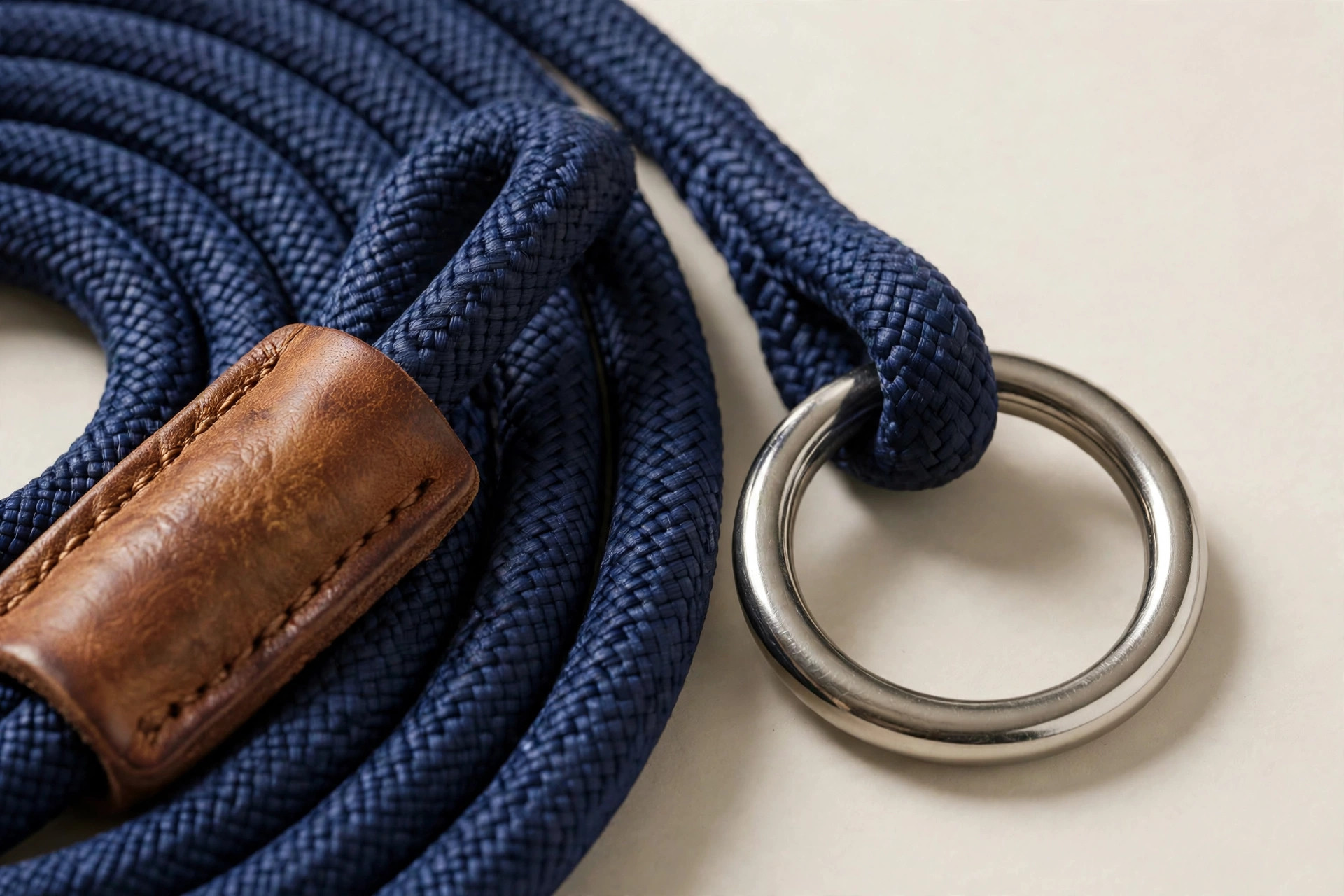
Strip away the drama: a P-leash — trainers call it a slip lead — is one continuous piece of rope. No collar. No buckle. One end threads through a metal ring to form a loop; the other end is your handle. Pull and the loop snugs; release and it loosens. That is the entire mechanism. The “P” is just the shape the loop makes when it hangs.
The version I keep in my training bag adds one small detail that changes everything: a leather toggle on the rope that works as a stopper. It physically prevents the loop from closing past a set point. My rule now is simple — no stopper, no slip lead.
Why trainers swear by them (and why the internet is furious)
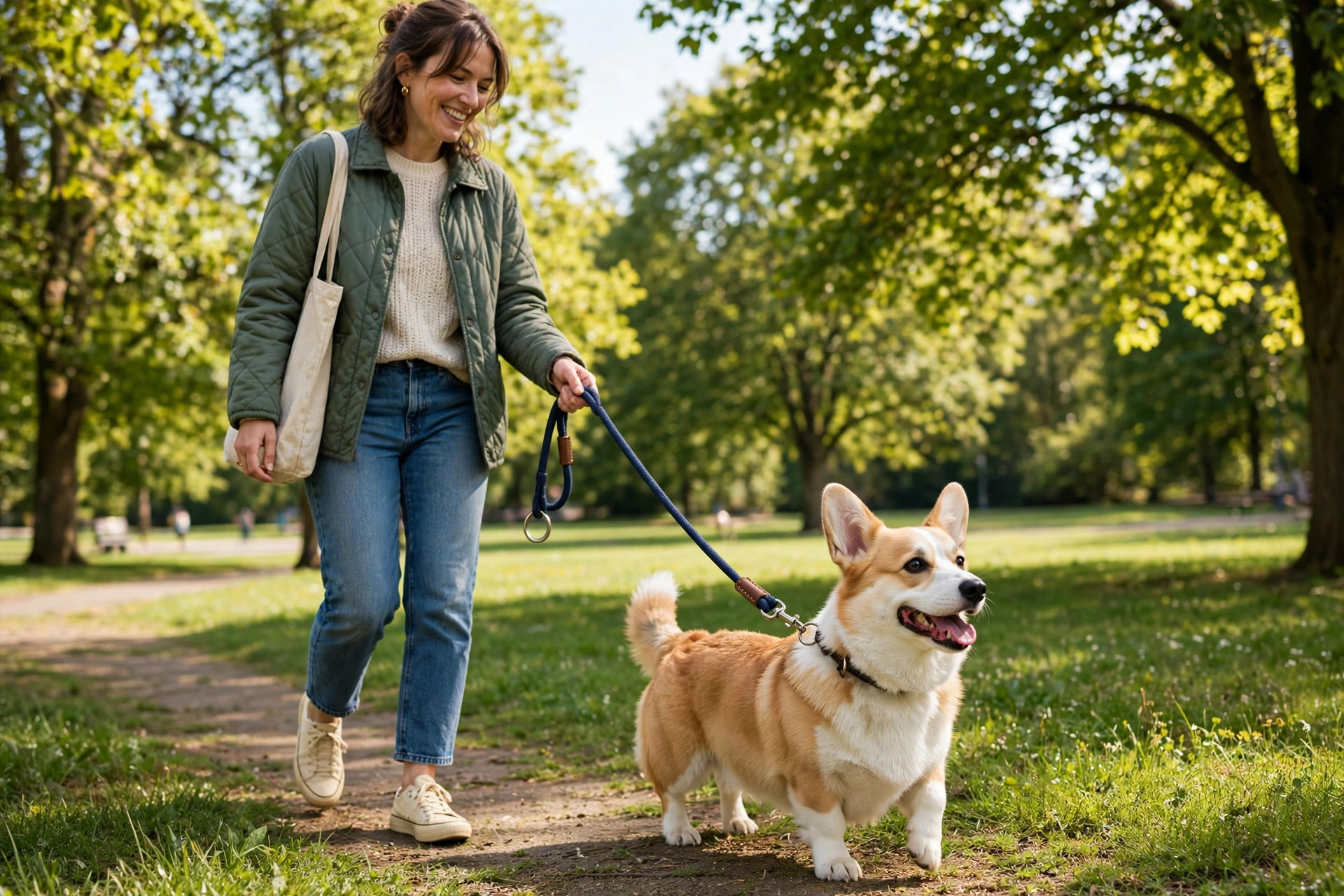
Here’s the honest split. Professional gundog trainers have used slip leads for decades because they deliver instant, precise feedback — a two-centimeter lift of the hand says “hey, check in with me” faster than any amount of verbal nagging. When timing is everything, nothing else talks that fast.
The internet hates them because plenty of people use them badly. Yank a slip lead hard and repeatedly and yes, you are compressing a trachea. That damage is real, and I’ve seen the vet bills to prove it. But look closely at that sentence: the villain is the yanking, not the rope.
My take, after eighteen months of daily use: a slip lead is a communication device, not a correction machine. If your training plan is “jerk harder until he stops,” put the rope down and walk away. No tool survives that philosophy — a flat collar in those hands does damage too.
How to fit it right (the part everyone skips)
Most slip-lead horror stories begin with bad fitting. This routine takes forty seconds and prevents nearly all of them:
- Make the “P.” Hold the handle, let the loop hang in a P shape, and slide it over the dog’s head.
- Park it high. The loop belongs right behind the ears, tucked under the jaw — the most sensitive steering point on the whole dog, where the lightest touch registers. Let it slide down to mid-neck and you’ve lost all precision; that sliding-down is where the choking stories come from.
- Set the stopper. Slide the leather toggle down until the loop physically cannot close tighter than two fingers’ width around the neck. Ten seconds. This is the single most important step in this entire article.
- Talk with your wrist, not your shoulder. Signals are tiny upward flicks, released instantly. If your arm travels more than a few inches, you’re overdoing it — the dog stopped listening three yanks ago.
1.5 meters or 3 meters? Pick by job, not by dog size
The Steady-Pull comes in two lengths, and the choice is simpler than the product page makes it sound. 1.5 meters is the city length: sidewalks, traffic, café patios, vet waiting rooms — anywhere the dog should stay within conversational distance. 3 meters is the training-field length: recall practice in the park, long-line-style work, giving a young dog room to make choices you can then reward.
The wrong purchase? Buying the 3-meter for crowded city walks “because longer is better.” Longer rope in traffic is just more rope to tangle around a stranger’s legs. Ask me how I know.
When NOT to use a slip lead
This is the section most product pages refuse to write, and it’s the one that matters most:
- Flat-faced breeds. Pugs, French bulldogs, English bulldogs — their airways are already compromised by anatomy. A slip lead is the wrong tool, full stop. Get a harness.
- Young puppies. Under roughly four to five months, the neck structures are still developing. Wait until the vet gives the all-clear.
- Fearful or reactive dogs. Pressure around the neck spikes stress hormones. You do not fix fear by tightening things.
- As a tie-out, ever. Never leave a slip lead on an unsupervised dog; never tie one to a post outside a shop. The safety note on the product page says this. I’m repeating it because people skim.
- If the fitting paragraph felt like homework. Honestly? If setting a stopper sounds like too much effort, buy a front-clip harness instead. There is zero shame in choosing the simpler tool.
The graduation plan nobody mentions
Here’s what no slip-lead seller wants to admit: it’s training wheels. The real goal is a dog who walks on a loose regular leash because he chooses to, not because a loop reminds him every twelve seconds. Most dogs I know graduated in four to eight weeks of consistent practice. After that the slip lead lives in the car “just in case” — and honestly, that glovebox exile is exactly where it belongs.
So, worth buying? If you’re actively training loose-leash walking or recall, and you’re willing to learn the fit — yes. It’s the most honest twenty dollars you’ll spend on dog gear this year. If you just want walks to magically get easier without changing a single thing you do — save your money. The rope can’t want it for you.
The one I’d actually hand a friend
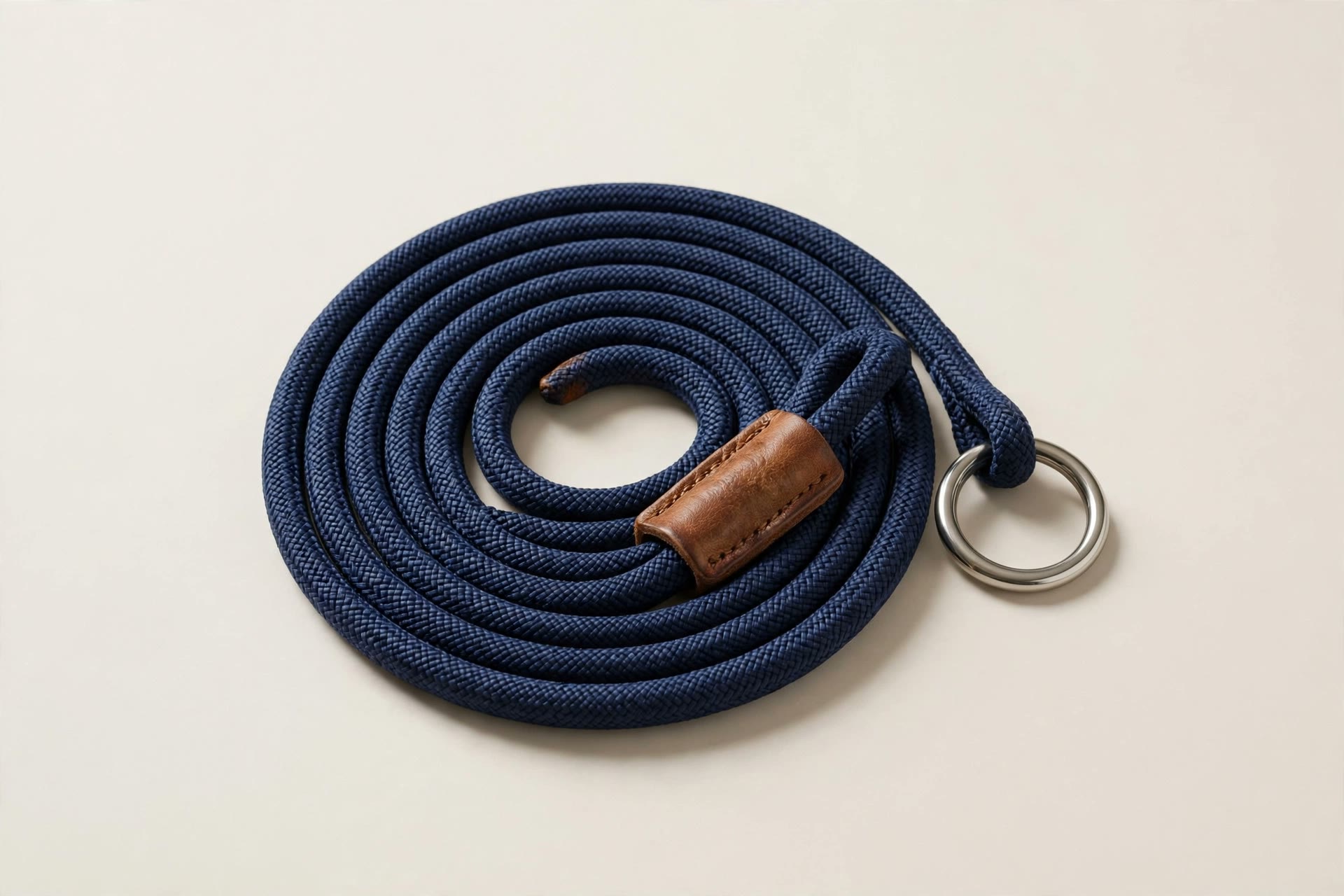
The Steady-Pull Training Leash is the one in my bag: 8 mm climbing-rope nylon, a genuine leather stopper instead of the usual plastic slider, 300 kg break strength, and your choice of 1.5 m or 3 m. It’s the slip lead I’d hand to a friend dealing with a puller — which, after the Labrador-squirrel incident, is literally how I ended up writing this.