Cat Shredding Your Sofa Arms? 3 Ways to Move the Scratching to a Scratcher-Lounge
I noticed the fringe on my sofa arm on a Tuesday morning.
Not decorative fringe. The kind a cat makes with six months of dedicated scratching — little threads sticking out everywhere, foam peeking through in one corner. My sofa cost me $2,800. My cat, Mochi, looked up at me with the calm of someone who had done absolutely nothing wrong.
Here’s what she taught me that morning: cats don’t scratch furniture to spite you. They scratch to stretch their backs, shed the dead outer layer of their claws, and stamp the spot with scent from the glands in their paws. Territory marking, claw hygiene, and a full-body stretch, all in one motion. Yelling at them or spraying water doesn’t stop it — it just teaches them to scratch when you’re not in the room. Sound familiar?
So you don’t fight the scratching. You redirect it. Three moves, and they actually work.
Move 1: Park the scratcher next to the sofa
This is the step most people get backwards. They buy a beautiful scratching post, tuck it into a corner nobody walks past, and then wonder why the cat ignores it.
Ask yourself: why does your cat shred the sofa arm and not the wall? Because it’s on the way. Cats scratch the spots on their daily commute — the sofa arm they vault over, the mattress corner they land on. Scratching is a habit of the route, not the room.
So take your scratcher-lounge and park it right next to the spot your cat already attacks. Not across the room — touching the sofa arm if you have to, even if it looks ridiculous. You’re not asking the cat to build a new habit from zero. You’re hijacking the existing one. This single decision matters more than which scratcher you buy, and I genuinely wish someone had told me before I spent $60 on a sisal tower my cat used as a hat stand for a year.
Move 2: Catnip the onboarding, then pay in treats
A brand-new scratcher smells like cardboard and suspicion. Your cat will sniff it once and walk off.
Sprinkle catnip over the scratching surface — the Scratch & Snooze ships with a free catnip pouch for exactly this purpose. Then use the oldest trick in animal training: reward the first touch. The instant those claws hit cardboard, a treat appears. Not five minutes later. That instant.
Two or three rounds of this and most cats connect the dots. A handful of treats is a lot cheaper than reupholstering a sofa.
Move 3: Pick a shape the cat will actually use
Unpopular opinion: tall sisal posts are overrated. Some cats love them. Mine walked past hers for twelve months straight.
What most cats actually prefer is horizontal scratching — the same motion they use on your sofa arm and your rug. A low, wide scratcher-lounge matches that instinct instead of fighting it. When you’re shopping, check three things:
- Enough surface area. If a cat can’t stretch out fully, it won’t bother. The Scratch & Snooze comes in two sizes: 50 × 25 × 12 cm for cats under 5 kg, and 65 × 30 × 14 cm for cats up to 8 kg. Measure your cat, not your optimism.
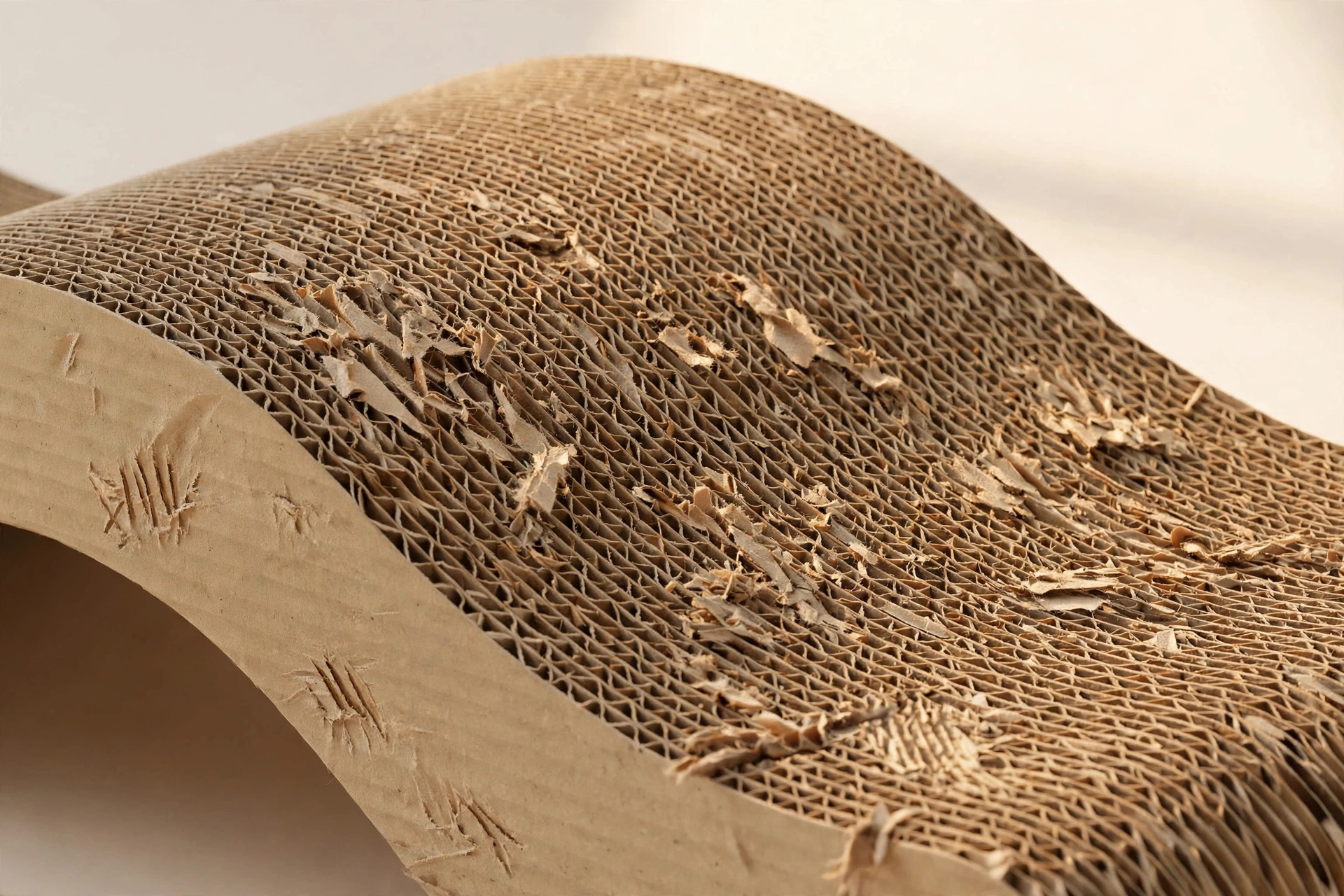
- Dense corrugate. Cheap, loose cardboard shreds in a week and the cat loses interest. High-density honeycomb cardboard holds up under months of daily scratching.
- Reversible. When one side wears down, flip it over for a fresh surface. You just doubled its lifespan for zero dollars.
And the curve matters more than you’d expect. An ergonomic, wave-shaped lounge lets the cat scratch, stretch — and then, this is the clever part — fall asleep right there. Cats only nap where they feel safe and comfortable. Once the lounge becomes the regular nap spot, the sofa arm is officially unemployed. That’s a win.
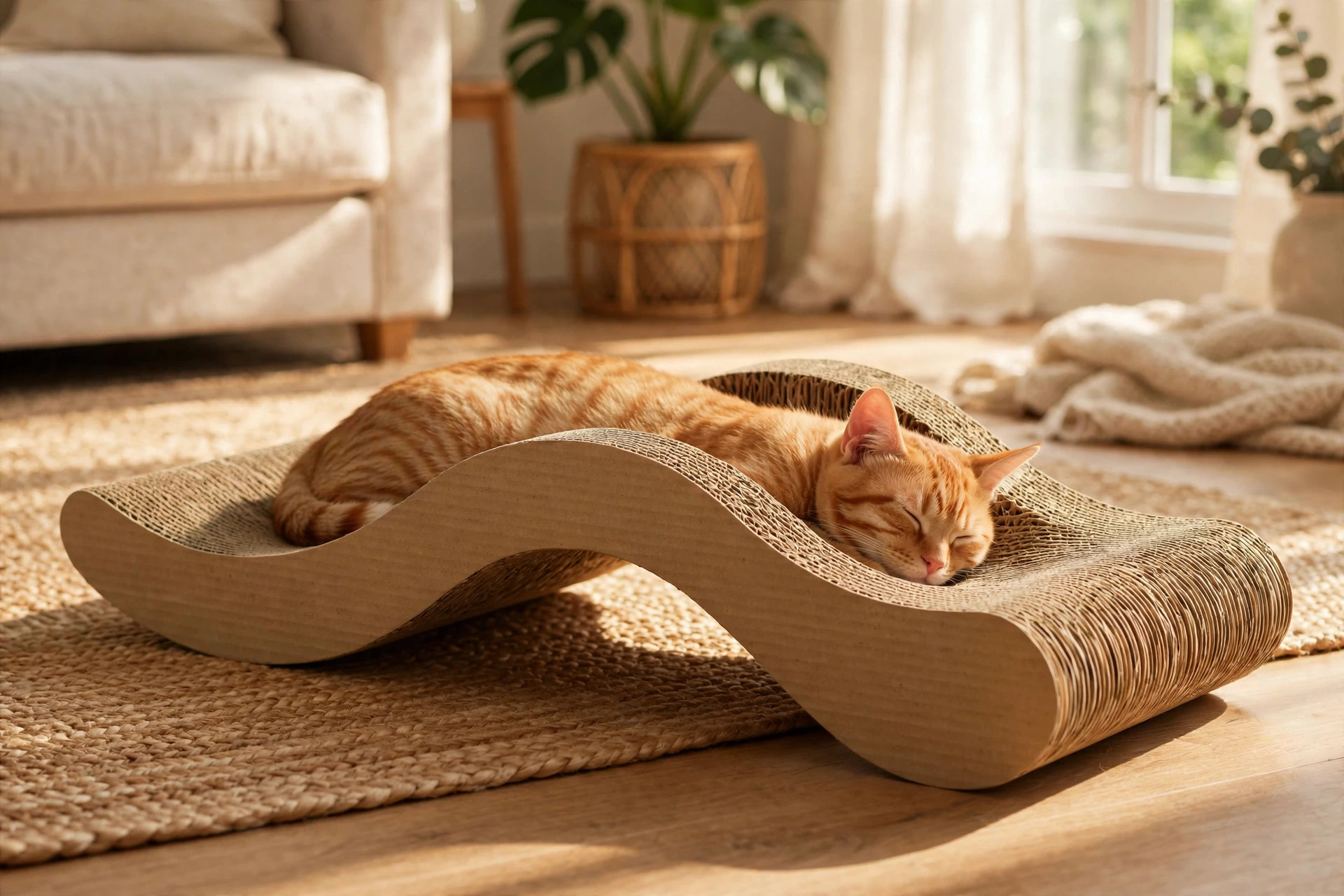
One more group this matters for: senior cats. An older cat with stiff joints won’t climb a tall post, but a low-entry lounge they can step onto in one move? That’s their speed. Same logic for multi-cat households — one good lounge that everyone uses beats three posts that everyone ignores.
What not to buy
Save your money on anti-scratch sprays. I’ve tried three brands. My cat sniffed the citrus one, sneezed theatrically, and scratched the sofa anyway — straight through the spray. A deterrent without an alternative just relocates the damage to your curtains.
Give it two to three weeks
Redirection isn’t overnight. Drape a throw blanket over the sofa arm in the meantime — not as punishment, just as a speed bump while the new habit takes root. Get the placement right and the catnip flowing, and most cats switch over within two to three weeks.
Mochi? She scratches the lounge every morning before breakfast, then sleeps on it until noon. The sofa arm has been fringe-free for four months. I still run my hand over it sometimes, just to enjoy the smoothness.
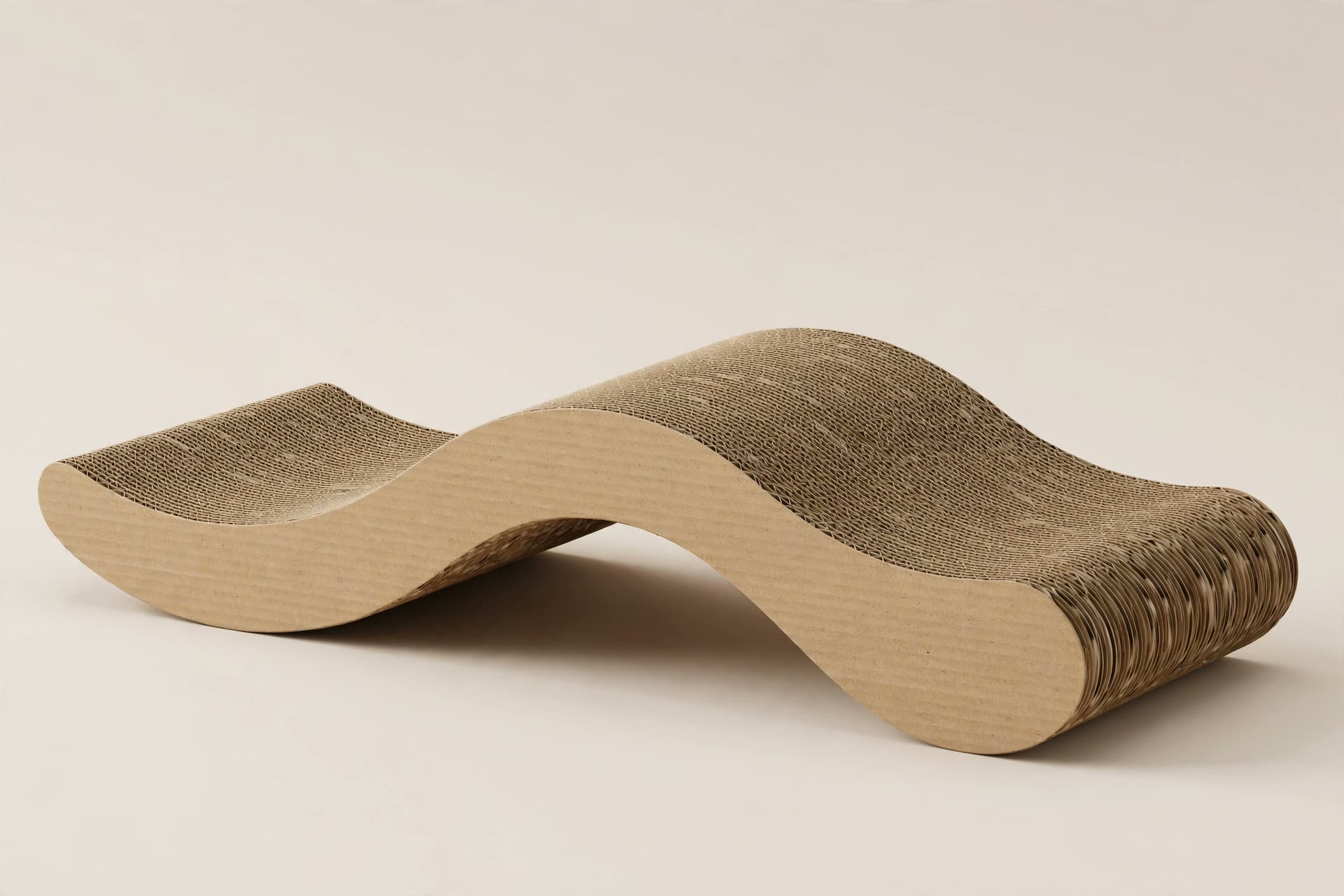
Featured in this article
Scratch & Snooze – Cardboard Lounge: the 2-in-1 scratcher-lounge from this guide — ergonomic curve for scratch-then-snooze, high-density honeycomb cardboard, reversible for double the lifespan, and a free catnip pouch to get your cat interested on day one.