Harness Training Your Cat: From First Fitting to First Walk (A Beginner’s Guide)
Let’s be honest: the reason most cat harnesses end up abandoned in a drawer is not the cat. It’s us. We strap it on, expect a nice walk, and get a cat doing a dramatic backwards flop like we’ve betrayed them personally.
My first attempt at harness training took exactly four minutes and ended with a scratched forearm, a harness tangled around a chair leg, and a cat who didn’t speak to me for two days. The second attempt — three weeks later, with a completely different approach — ended with my cat walking me down the garden path on a Saturday morning. The difference wasn’t the cat. It was the method.
Why a Harness, Not a Collar
This one is non-negotiable. A cat’s trachea is delicate — a sudden lunge on a collar-and-leash combo can bruise it, and vet bills for throat injuries start around $200 and go up fast. So why do people still try collars? Because collars are easy. But easy isn’t safe.
A proper cat harness distributes pressure across the chest and shoulders. The H-shaped design in particular spreads the load so evenly that even a full “nope, going home” dash-back won’t choke your cat. If your harness doesn’t do that, it’s the wrong harness. (I’ll recommend the exact one I use at the end — no, this isn’t a sales pitch, it’s the one that survived two years of weekly walks.)
Picking the Right Harness (Most People Skip This)
Not all cat harnesses are created equal. Vest-style ones are cozy but hot in summer; cheap elastic ones stretch until your cat slides out like a noodle. Here’s my short checklist after trying five different designs:
- H-shape or Y-shape: even pressure distribution, no choking, and much harder to escape from than a figure-8.
- Breathable material: mesh beats nylon in warm weather. Your cat will tolerate the harness 3x longer if they’re not overheating in it.
- Fit check: you should slide two fingers — no more, no less — under every strap. One finger means too tight (they’ll freeze). Three fingers means they’ll be out of it before you reach the elevator.
- Quick-release buckles: because someday your cat will get tangled in a bush and you’ll want it off in two seconds.
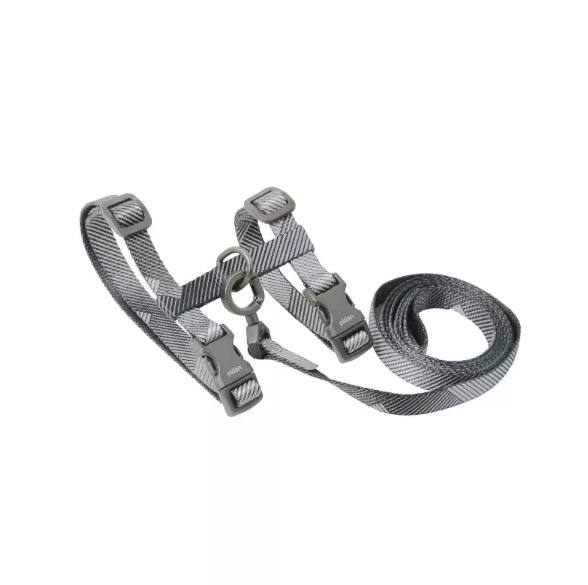
That’s why I stuck with the pidan H-Harness & Leash Set: breathable mesh, an H-shape that resists escapes, and it comes with a matching leash so you don’t have to hunt for a compatible one. The buckles are the quick-release kind, which saved me during the Great Bush Incident of 2025.
The 5-Step Training Plan (Give It 2 Weeks)
Forget the “one weekend” tutorials. Realistic timeline: 10–14 days. Some bold kittens do it in 5. My rescue took 18. Both are fine.
Days 1–2: The Sniff Phase. Leave the harness on the floor near their favorite spot. Let them sniff it, rub on it, ignore it completely. Put a treat on top of it. Do nothing else. Boring? Yes. Necessary? Also yes.
Days 3–5: The Drape. Drape the harness loosely over your cat’s back while they eat. Don’t fasten anything. Five seconds, then take it off and give a treat. Repeat twice a day. You’re building the association: harness = good things happen.
Days 6–8: The Fasten. Fasten it loosely for 30 seconds. Then one minute. Then five. Play with them while they wear it — a distracted cat forgets to be dramatic. Treats after every session. If they flop and refuse to move, that’s normal. Shorten the session, don’t force it.
Days 9–11: Indoor Walks. Attach the leash and let them wander the house with it trailing (always supervised — a trailing leash can snag). Hold the leash loosely. Never, ever tug. If your cat freezes, you wait. If they go somewhere, you follow. You’re the bodyguard, not the tour guide.
Days 12–14: The First Outdoor Walk. Start in the quietest place available — a garden, a calm courtyard, not the dog park on a Saturday. Keep the first session to 10 minutes. Let the cat choose the direction. End on a good note with a treat, before they get tired of it.
Three Things Nobody Tells You
1. Some cats walk you. My cat’s “walk” consists of inspecting three specific bushes and then lying in a sun patch for 20 minutes. That’s not failure — that’s a cat being a cat. Are you really going to argue with someone who naps 16 hours a day about efficiency?
2. Heat matters more than you’d think. Above 28°C (82°F), keep walks short or skip them. A harness adds a layer, and cats don’t sweat it off like we do. Morning or evening only in summer.
3. The leash is a safety line, not a steering wheel. If you feel the urge to pull, stop walking instead. A pulled cat panics; a patient human gets a cat that actually looks forward to walks.
When to Skip the Walk
Not every day is a walk day. Skip it if your cat is hiding, if there’s construction noise outside, or if you can’t give them your full attention. A forced walk teaches your cat that the harness means stress — and then you’re back to the drawer.
What I Actually Recommend
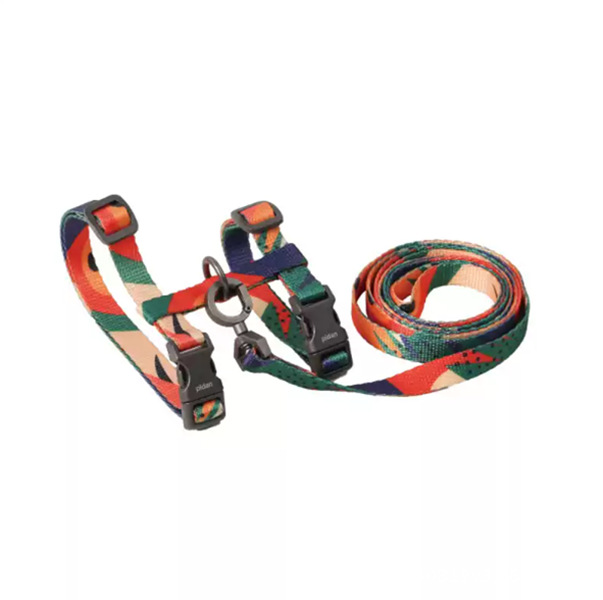
After two years and five harnesses, the one I keep reaching for is the pidan H-Harness & Leash Set. The H-shape distributes pressure evenly across the chest (no choking on sudden dashes), the breathable mesh keeps them cool, the quick-release buckles are genuinely quick, and the included leash is the right weight — not so heavy it drags on a 4 kg cat. It comes in a clean gray stripe and a fun colorful print. Worth every penny, and cheaper than one vet visit for a throat injury.
Start today: order the harness, leave it on the floor, and give your cat two weeks. That drawer deserves better.
Related products: pidan H-Harness & Leash Set · Comfy-Y Harness · Y-Harness vs H-Harness for Dogs