Stop the Pull: How to Choose the Right Leash for Loose-Leash Walking
Every dog owner knows the feeling: one squirrel, one interesting smell, and suddenly your shoulder is doing all the talking. A good walk should be the best part of your day — not a daily tug-of-war. The good news? The fix is simpler than most people think. It comes down to two things: the right gear, and a handful of training habits that actually stick.
First, understand why dogs pull
Dogs aren’t pulling to dominate you — they’re pulling because it works. There’s also a built-in reflex at play: the opposition reflex. Push against a dog, and its instinct is to push back. So a constantly tight leash literally trains your dog to pull harder.
Add excitement, an under-exercised body, and the fact that every time you follow a pulling dog it gets exactly where it wanted to go, and you have a habit that reinforces itself on every walk. Break the cycle, and everything gets easier.
It also helps to reframe what the leash is for. A leash is a safety line and a communication channel — not a steering wheel. If you find yourself constantly hauling your dog back into position, the equipment or the training (usually both) needs a rethink, not your biceps.
The three leash types (and when to use each)
Not all leashes do the same job. Here’s the honest breakdown:
1. The standard flat leash (1.2–1.8 m)
The everyday default, and the best tool for training. Simple, predictable, and it keeps communication between you and your dog clear. If you only own one leash, make it this one.
2. The training / no-pull leash
Built for dogs that are still learning. The key feature is a second “traffic” handle near the clip — it lets you bring your dog close in an instant around traffic, other dogs, or crowded sidewalks, without wrapping the leash around your hand. A padded main handle saves your palm on longer walks.
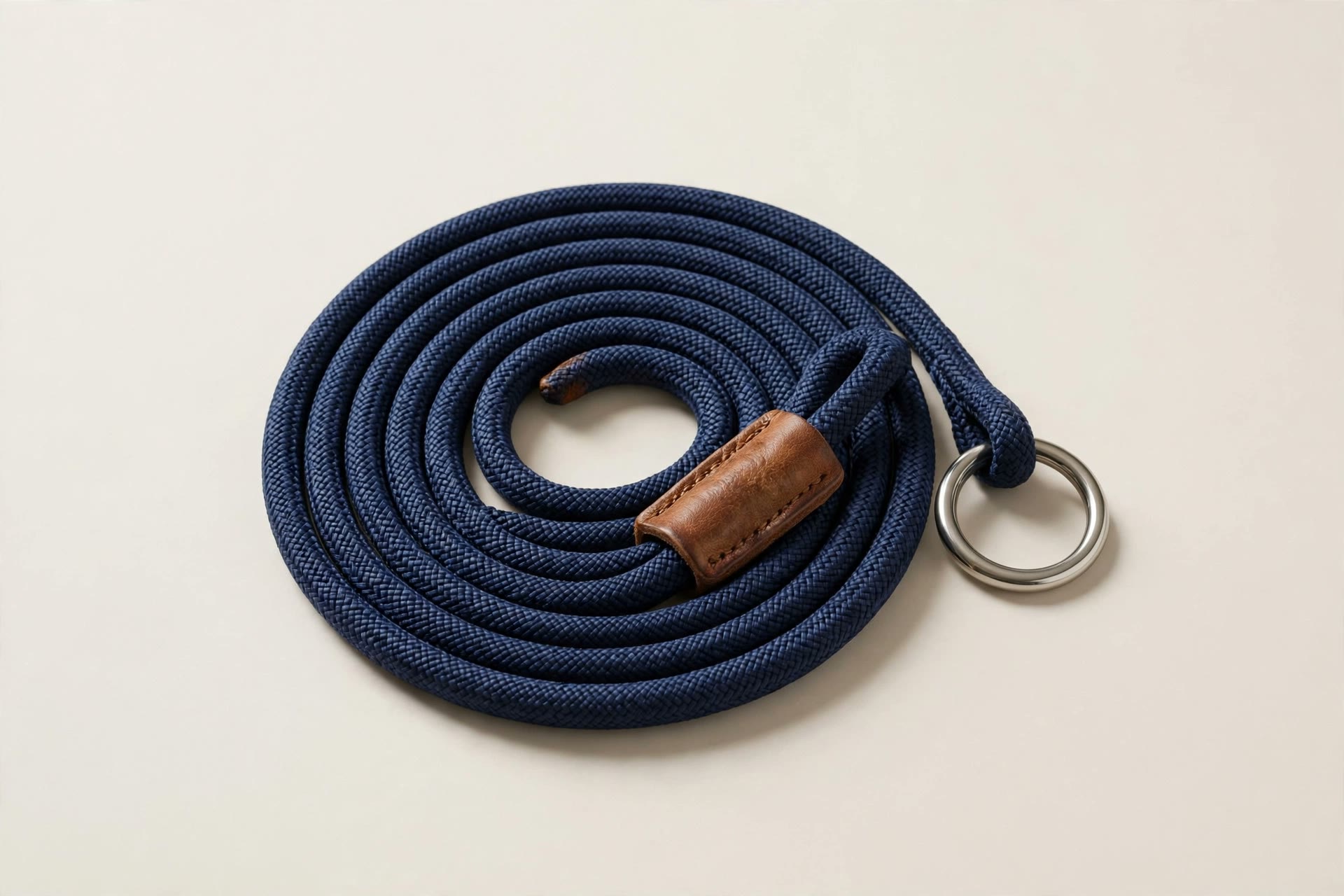
3. The retractable leash
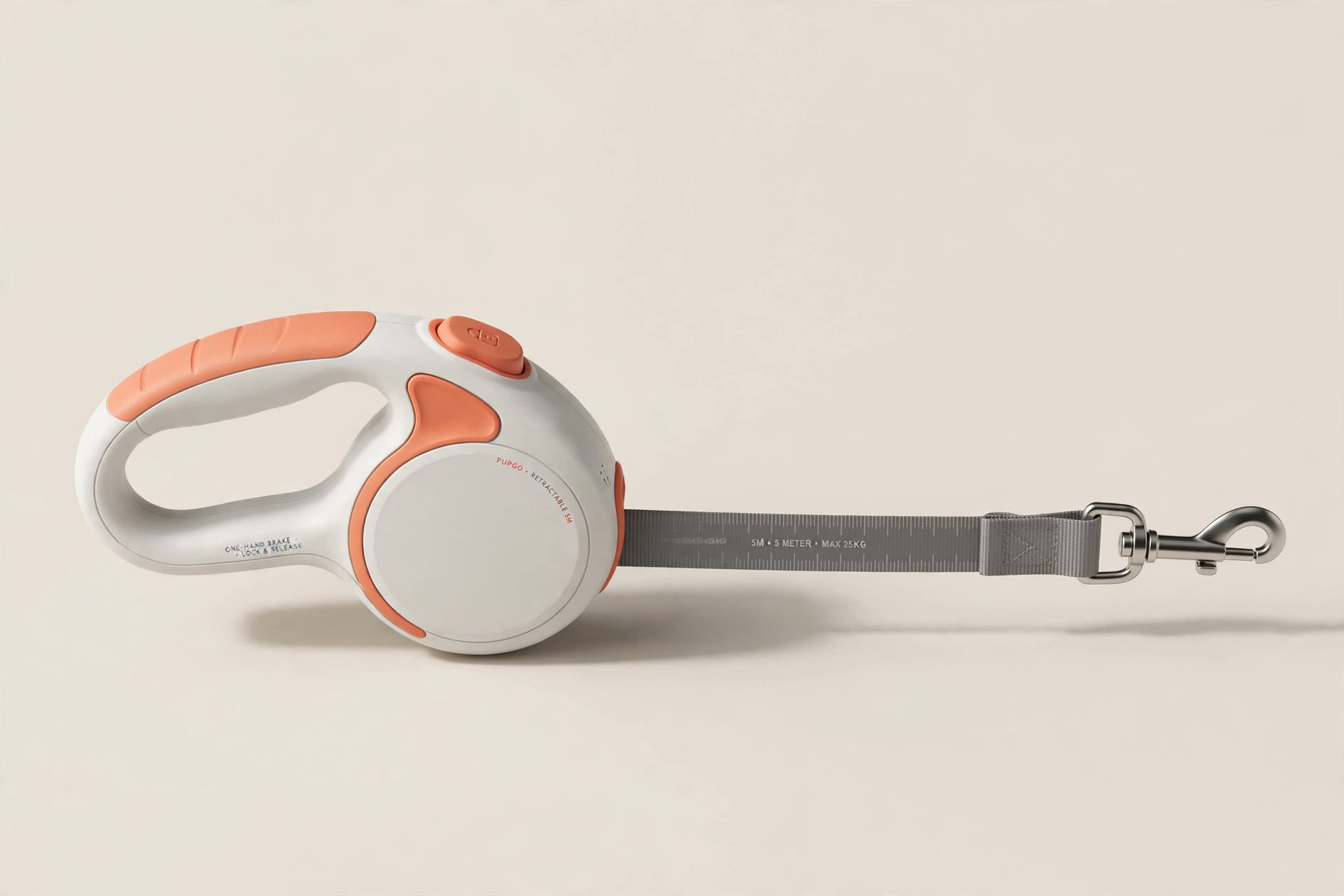
Great for open spaces where your dog can safely roam and sniff — a 5-metre line turns a boring lawn into a proper sniffari. But it’s the wrong tool for training loose-leash walking or for busy streets, where a long line is a tripping hazard. Use it where it belongs: parks, fields, and quiet trails.
Collar vs. harness: what pullers should wear
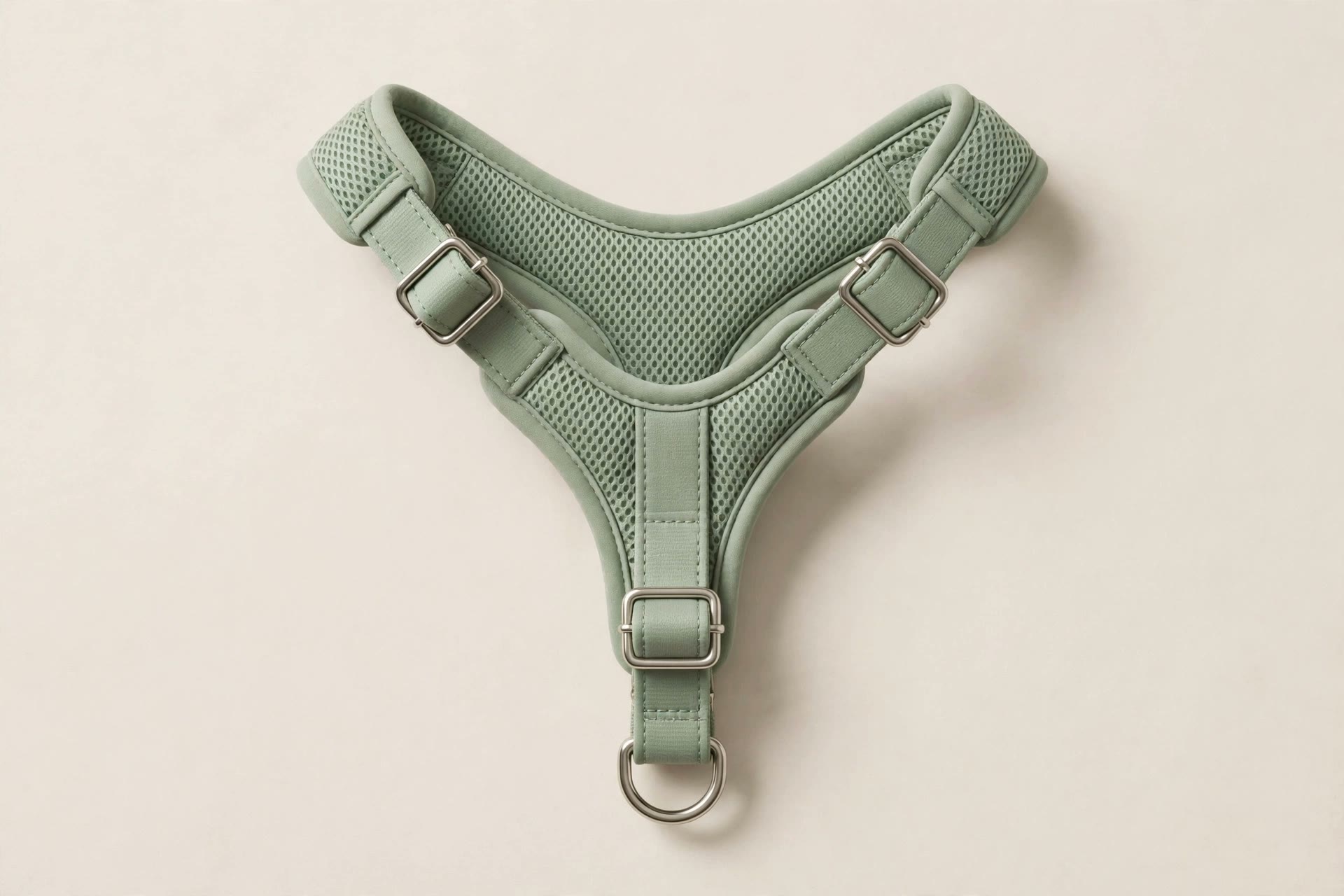
If your dog pulls, a Y-shaped harness beats a collar every time. A collar puts all the force on the throat; a well-fitted Y-harness distributes it across the chest and shoulders, gives you steering control without choking, and keeps the leash attachment at the back where it can’t tangle the front legs. Look for adjustable straps at the neck and chest, and soft padding where it sits against the body.
What to look for when buying a leash
Walk into any pet store and the wall of leashes is overwhelming. Ignore the patterns and focus on these five things:
- Length: around 1.5 m is the sweet spot for city walks; 3–5 m for relaxed sniff walks.
- Width and material: match the leash to your dog’s size and strength — sturdy nylon or climbing-rope style webbing for strong pullers.
- Handles: a padded main handle plus a traffic handle near the clip.
- Hardware: a swivel snap that won’t twist, and a clasp rated for your dog’s weight.
- Visibility: reflective stitching is a small detail that matters a lot on night walks.
5 training tips that actually work
1. Be a tree. The instant the leash goes tight, stop dead. The walk only continues on a loose leash. Boring for the dog — which is exactly the point.
2. Reward the slack. In the early days, treat every few steps of loose-leash walking. You’re paying for the behaviour you want, generously, before asking for more. Keep treats in a pouch on your walking side so the reward lands exactly where you want the dog — next to you, not out front.
3. Change direction. Dog surges ahead? Calmly turn and walk the other way. Pulling stops predicting “forward” and starts predicting “oops, wrong way”.
4. Train a little tired. A five-minute play session before the walk takes the edge off and makes learning dramatically easier.
5. Keep sessions short. Five to ten focused minutes beat a frustrated half hour. Always end on a win.
None of this requires special talent — just consistency for a week or two. Most owners see a real difference within days.
Gear up for better walks
The right equipment won’t train your dog for you, but it removes every excuse. Here’s our Walk collection:
- Steady-Pull Training Leash — dual handles including a traffic handle, padded grip, reflective stitching. Our pick for dogs in training.
- Comfy-Y Harness — Y-shaped, no throat pressure, fully adjustable with soft padding.
- Roam Retractable Leash (5 m) — smooth brake and lock for safe sniffaris in open spaces.
Walks are the highlight of your dog’s day. Make them the highlight of yours too.