Are Retractable Leashes Bad? What Actually Goes Wrong (and How to Use One Safely)
A trainer once told me, in front of a whole puppy class, that retractable leashes should be illegal. The woman next to me quietly rolled hers up and stuffed it in her bag. I laughed — then went home and googled it, because honestly? I’d been using one for months and had no idea it was controversial.
So: are retractable leashes actually bad? Or is this one of those dog-world holy wars where both sides are half right? I’ve been on both sides of this argument now. Here’s the honest version.
Why trainers hate them (and they’re not entirely wrong)
The complaints come in three flavors, and two of them are legit.
1. Thin round cords cause injuries. Most horror stories — rope burns, snapped cords, dogs wrapping the line around another dog’s legs — involve cheap round-cord retractables. A thin cord under tension is basically a cheese wire. This is real, and it’s the strongest argument in the whole debate.
2. They teach dogs that pulling works. Sort of true. If your dog pulls and the leash keeps giving, it learns that pressure = forward progress. A retractable won’t fix a puller; it just gives the pulling more room to happen. Fair criticism.
3. Dogs dart into danger. A dog on 8 meters of line can reach the road before you can reel it in. Also true — if you let it. This one is a handling problem, not a product problem. Which brings me to my actual point.
My take: it’s a tool problem, not a category problem
Here’s what changed my mind. I switched from a cheap round-cord retractable to a flat-tape one, and the difference was night and day. A 16mm flat nylon tape doesn’t cut into your hands the way a round cord does. It doesn’t twist into knots. It retracts smoothly instead of whipping back. Most of the “retractable leash horror story” energy comes from the worst 15-dollar round-cord versions, not from the concept itself.
A hammer isn’t bad because some people hit their thumbs. The question is whether you use it right. So let’s talk about that.
3 rules that make a retractable leash safe
Rule 1: Lock it short around roads, dogs, and people. This is the big one. Any retractable worth buying has a one-touch brake and a lock. Thumb down = instant stop. Approaching a crosswalk? Lock it at 1.5 meters and it’s just a regular leash. The full length is for the park and the trail, not the sidewalk next to traffic. The Roam’s brake sits right under your thumb — you don’t fumble for it.
Rule 2: Match the length and weight rating to your dog. Don’t buy the 8-meter version for city sidewalks; that’s asking for trouble. The three sizes exist for a reason: 3m for courtyards and small parks (dogs up to 15 kg), 5m for parks and neighborhoods (dogs up to 25 kg), 8m for trails and open spaces (dogs up to 50 kg). An undersized retractable with an overpowered dog is how springs fail. Roam’s spring is tested for 50,000+ retractions, but even a great spring can’t defy physics — buy for your actual dog.
Rule 3: It’s not a chew toy, and inspect the tape. No retractable survives being chewed, and a frayed tape is a weak tape. Glance at the 16mm tape every few weeks. Takes ten seconds. This applies to every leash you own, honestly.
Where a retractable leash genuinely shines
Sniff walks. That’s the answer. My beagle’s brain runs on smells, and a 5-meter flat tape lets her do a proper “sniffari” — zigzagging between trees, reading every bush’s news — while I stroll behind her like a normal person instead of being dragged tree to tree. She gets 4x the enrichment. I get to keep my shoulder.
It’s also the best cheap tool for recall training in safe, open areas. Long line, dog wanders, you call, dog comes back, treat party. The brake gives you an emergency stop while the habit builds. Once recall is solid? You might not need it anymore. That’s fine — tools can be temporary.
Who should skip it
I’ll be direct: don’t buy one if your dog is a serious puller and you’re not working on it — you’ll just fund a longer pulling habit. Don’t buy one for a reactive dog you can’t control at close range. And skip the ultra-cheap round-cord models entirely; the thin cord versions are where nearly every injury story starts. If the listing doesn’t say the tape width, that’s your answer.
Still on the fence? Ask yourself this: where do you actually walk? Open park, quiet trail, big field — a flat-tape retractable will make those walks better. Busy city sidewalk every day — stick with a fixed leash and save your money.
The one I’d actually recommend
After trying the cheap round-cord kind (never again) and a couple of mid-range tapes, the Roam Retractable Leash is the one that stayed on my hook. Flat 16mm nylon tape instead of a round cord, a one-touch brake with a real lock, an ergonomic anti-slip grip that doesn’t cramp your hand on long walks, and three honest sizes — 3m, 5m, 8m — matched to 15, 25, and 50 kg dogs. ABS housing, chrome snap hook, spring tested past 50,000 retractions.
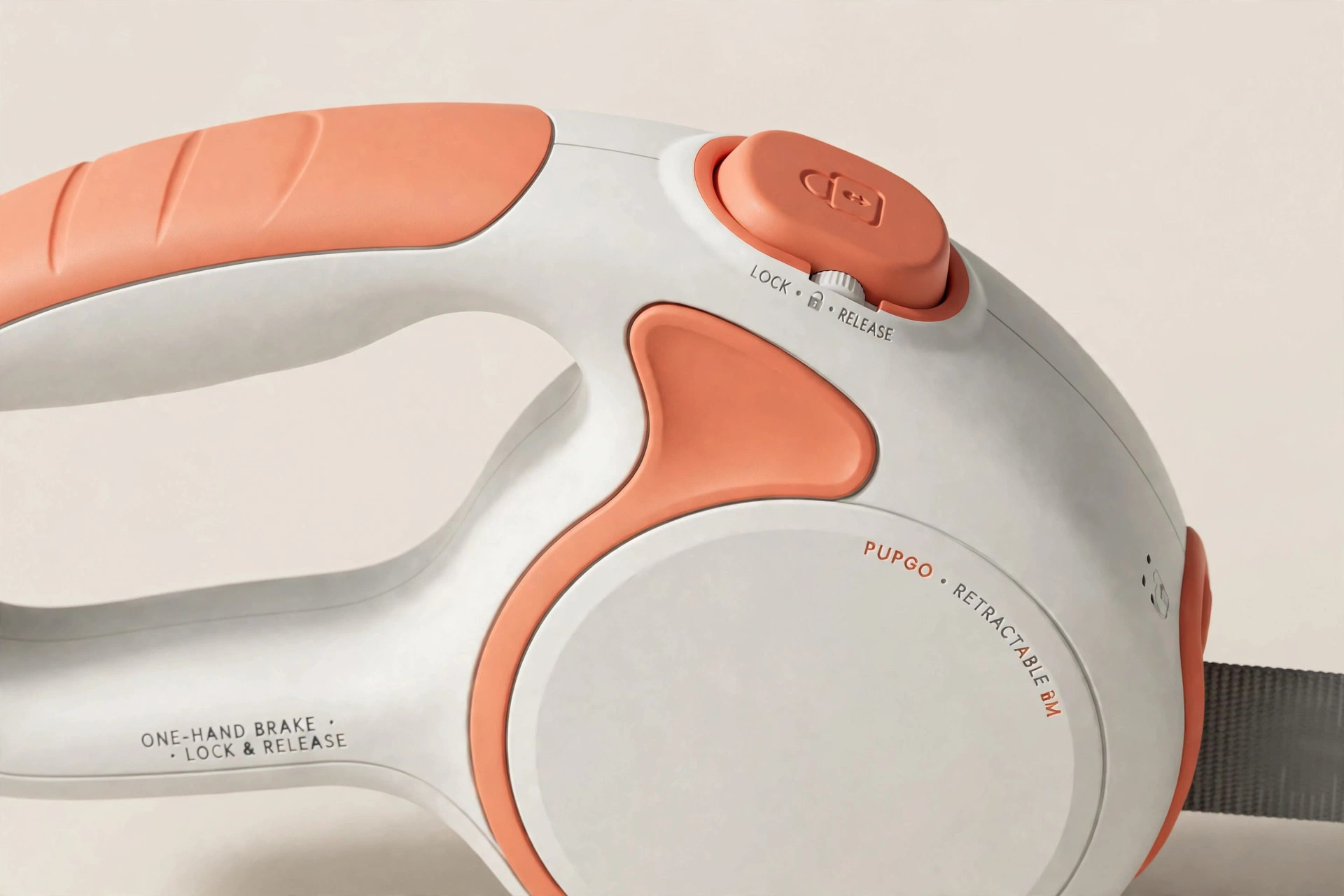
It’s the leash I use for weekend trail walks now. Locked short at the trailhead, full 8 meters once we’re in the trees. My dog gets her sniffari. I keep my thumb on the brake and my sanity intact.
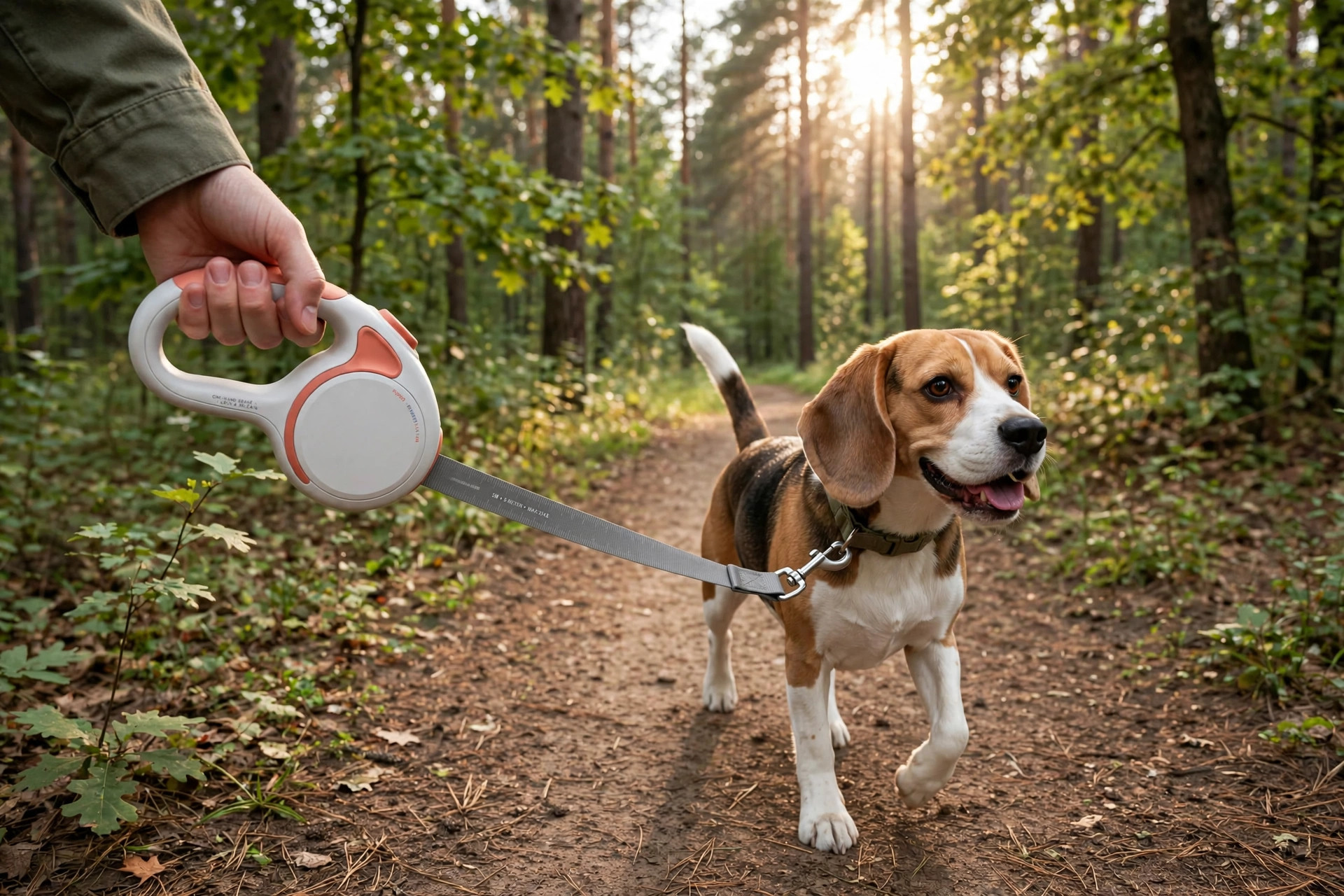
So, are retractable leashes bad? The cheap round-cord ones — yeah, pretty much. A well-made flat-tape one, used with the brake and a bit of sense? It’s one of the best walk upgrades you can buy. The tool was never the villain. The 8 meters of unsupervised freedom was.
Recommended: Roam Retractable Leash – 5m — flat tape, one-touch brake, up to 25 kg. The trail-walk upgrade.