Floating Frisbee for Dogs: 6 Tips for Teaching Water Fetch (From a Dog Who Hated Water)
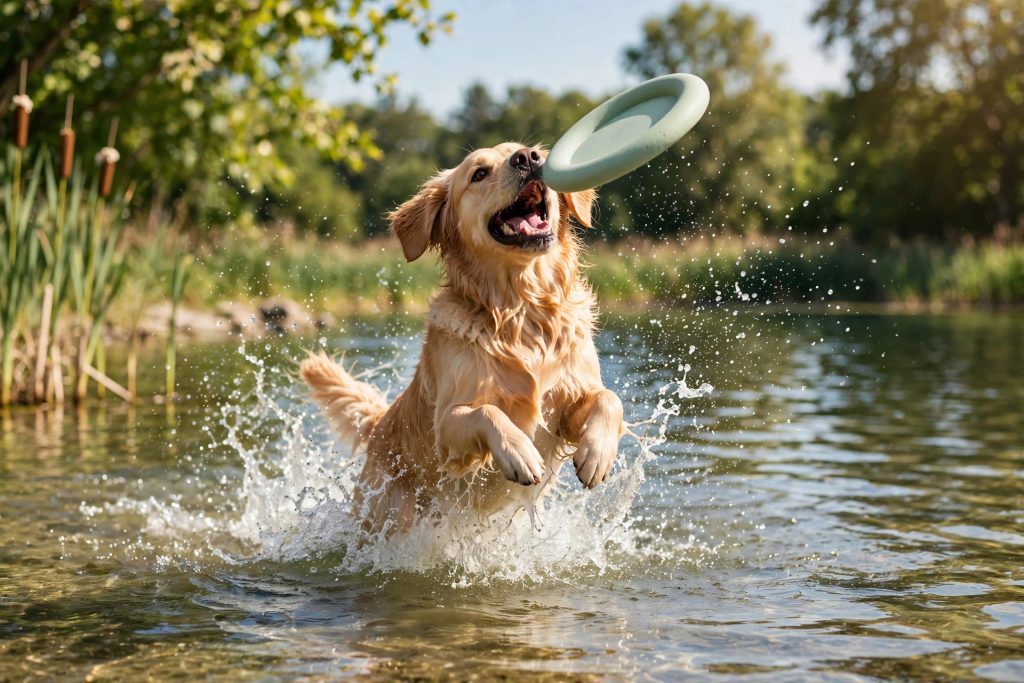
I’ll be honest: my first attempt at water fetch was a disaster. Two summers ago I took my friend’s lab, Biscuit, to the lake with a regular hard-plastic frisbee I’d grabbed from a supermarket shelf. I threw it. It plopped into the water, bobbed twice, and sank out of sight in about four seconds. Biscuit stood on the shore, stared at the spot where his toy had vanished, and refused to go in past his ankles for the rest of the afternoon.
Here’s what I’ve learned since: most dogs don’t hate water. They hate being thrown into the deep end — literally — with the wrong gear and zero warm-up. If your dog freezes at the water’s edge, the problem is almost never the dog. It’s the setup.
1. Start where they can touch the bottom
Don’t launch a frisbee into the middle of the lake on day one. Wade in yourself first, knee-deep, and toss it two meters — barely a throw. The dog follows you in because you’re there, not because of the toy. Biscuit needed three visits before he’d swim past the drop-off. Some dogs need ten. That’s fine. Rushing this step is how you create a dog that hates water for life.
2. Use a frisbee that actually floats (sounds obvious, isn’t)
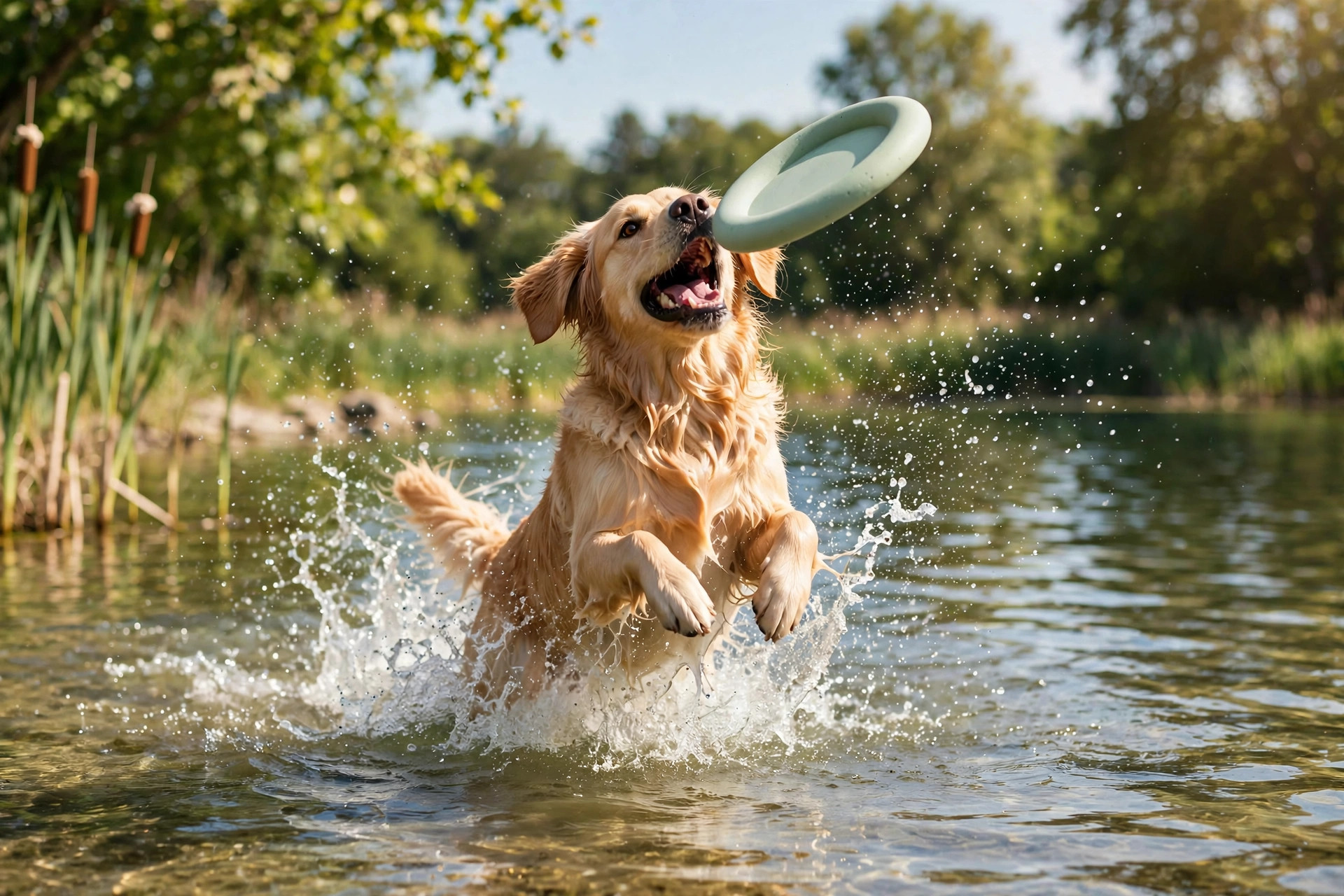
This is where I wasted money. A regular frisbee sinks. A tennis ball gets waterlogged and goes under after a few minutes of paddling around it. What you want is a buoyant foam core that rides high on the surface — the dog can see it and grab it without dunking its whole head underwater. The Splash Flyer weighs just 130 g and its foam core keeps it floating on top; Biscuit could spot it from ten meters out and plan his approach instead of panicking.
3. Soft rim, or don’t bother
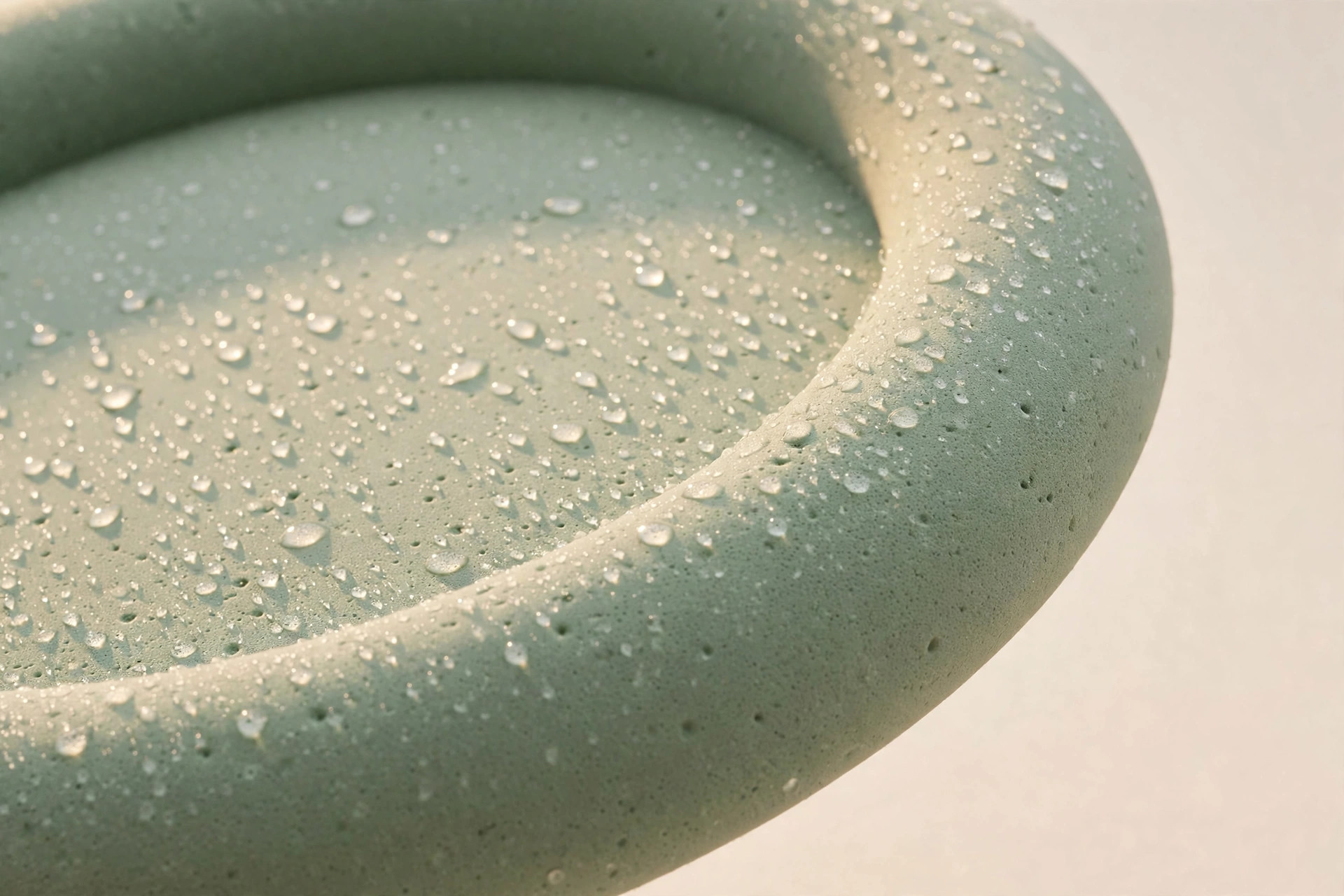
Here’s an opinion: hard plastic discs are not worth buying for water fetch. When a dog catches a frisbee mid-air, it catches it with its teeth — at speed. A rigid edge can bruise gums or chip a tooth, and I’ve seen it happen. A soft, flexible rim deforms on impact instead of fighting the jaw. The Splash Flyer uses a soft TPR and EVA foam rim for exactly this reason, and it’s non-toxic and BPA-free, which matters when the thing spends half its life in your dog’s mouth.
4. Bright colors are a feature, not fashion
On open water, a white or dull-colored toy disappears against the glare. Bright orange or blue — high-visibility colors — means you can track it and so can your dog. Thirty seconds of swimming in circles looking for a lost frisbee is thirty seconds of wasted energy and rising panic. Visibility is a safety feature.
5. It’s a fetch toy, not a chew toy — supervise
This one comes straight from the care instructions and it’s worth repeating: the disc is puncture-resistant TPR, built to survive enthusiastic chewers during play, but it’s not designed to be gnawed on for an hour while you scroll your phone. Watch your dog, especially the power chewers. Take the frisbee away when the game ends and it lasts for years — a customer told me theirs survived two full summers of weekend lake trips.
6. Rinse it after saltwater or pool sessions
Salt and chlorine are rough on everything, toys included. A quick rinse with fresh water and air dry takes forty seconds and keeps the foam from getting crusty. It’ll fly straighter too — the Splash Flyer is rated to fly up to 30 m, and a clean, balanced disc is noticeably easier to throw far. Thirty meters of flight is no joke when your dog is already sprinting; a wobbly throw lands short and confuses them.
A word on water safety, because it matters more than any toy
Current and undertow are the real danger, not the frisbee. Rivers and ocean surf are advanced mode — start at a calm lake with a gentle slope. Weak swimmers, puppies, and short-nosed breeds should wear a dog life vest; there’s no shame in it, and the good ones have a handle on top so you can lift your dog out fast. And near the shore, keep a long leash on until recall is rock solid. Our Roam Retractable Leash gives 5 m of freedom while you keep control — enough room for a dog to splash, short enough to reel in.
You know what’s funny? Biscuit now drags me to the water. Last month he swam out fifteen meters, grabbed his frisbee, and brought it back prancing like he’d won the lottery. The same dog who wouldn’t go past his ankles.
If your dog is still in the ankle-deep phase, that’s okay. Get the right frisbee — one that floats high, feels soft in the mouth, and that you can actually see on the water — and let them figure out the rest at their own speed. The water isn’t going anywhere.
Tried and tested at Fuzzhop: the Splash Flyer – Floating Dog Frisbee (130 g, floats high, soft tooth-friendly rim, flies up to 30 m). Pair it with the Roam Retractable Leash – 5m for safe shoreline sessions.